Streaming has completely changed how people consume entertainment. As linear TV declines and platforms like Netflix, Prime Video, and Disney+ Hotstar dominate living rooms, OTT (over-the-top) and CTV (connected TV) ads are no longer optional. They’re central to any modern media strategy.
For advertisers, the opportunity is massive. These channels offer advanced targeting, measurable engagement, and interactive formats that traditional TV simply can’t match. However, with competition intensifying, brands can’t afford to run generic campaigns. They need to focus on precision targeting, creative optimization, and tools that bridge the gap between offline and online engagement.
This is where QR codes step in. When strategically integrated into OTT and CTV ads, QR codes turn passive viewing into active participation. They make ads instantly shoppable, measurable, and trackable—delivering not just reach, but real business outcomes.
This article examines five strategies to optimize OTT/CTV campaigns, providing practical tips, examples, and insights into the future.
Why OTT and CTV advertising matter right now
The numbers say it all. Take a look:
➡️ CTV ad spend in the U.S. will hit $33.48 billion this year (2025)
➡️ 84% of marketers believe CTV offers better targeting than linear TV.
➡️ Nearly 75% of U.S. households will use CTV by 2029.
➡️ 83% of Gen Zers say they are more open to ads on OTT/CTV than any other digital channel.
This isn’t the future; it’s happening now. For advertisers, it means one thing: your OTT/CTV ads need to do more than reach viewers. They need to engage, convert, and prove ROI.
5 Actionable strategies for brands to improve their OTT and CTV ads
1. Understand the OTT and CTV landscape
Clarity matters. Hence, let’s start from the beginning.
OTT refers to content delivered over the internet via platforms like Netflix, Disney+ Hotstar, or YouTube. CTV, on the other hand, refers to the devices, like smart TVs, Roku, Fire TV, Apple TV, etc., which stream this content.
Why does this distinction matter? Because ad formats and user behavior differ across OTT platforms and CTV devices. Here’s how:
👉 Pre-roll and mid-roll ads → high completion rates, ideal for broad messaging.
👉 Pause ads → subtle reminders, perfect for awareness or launches.
👉 Interactive ads (with QR codes) → turn TV into a storefront or survey tool.
By tailoring your creatives and QR experiences to each format, you increase completion, engagement, and conversions.
2. Target the right audience with precision
In OTT/CTV, targeting is everything. Since viewers are logged in across devices, you can leverage demographics, interests, and viewing habits to zero in on your ideal audience.
For example:
- A fitness brand can target young adults who watch YouTube TV for workout content.
- A fintech brand can target professionals streaming Bloomberg or CNBC apps.
🔎 Fact check: According to Nielsen research, addressable TV enhances targeting precision, leading to improved return on investment (ROI) compared to traditional linear TV advertising. Industry studies also demonstrate that addressable TV can deliver up to 30% more incremental reach than standard linear buys. When combined with QR codes tailored to specific audience segments, campaigns become not only more visible but also more actionable.
3. Optimize your creative for engagement
The CTV environment is “lean-back.” Viewers are relaxed and less likely to interact unless your ad grabs attention. This makes creative optimization non-negotiable. Hence,
✅ Keep ads short, punchy, and under 30 seconds.
✅ Use bold visuals and clear messaging to cut through screen clutter.
✅ Place QR codes prominently with cues like “Scan to Shop Now” or “Unlock Exclusive Content.”
🔎 Fact check: A Samsung Ads and Kantar’s study shows that Connected TV campaigns can significantly boost brand recall and purchase intent, particularly among Gen Z viewers (8.5%). Pairing these campaigns with scannable QR codes tailored to each audience segment can further increase engagement and conversions.
4. Make Ads interactive with QR codes
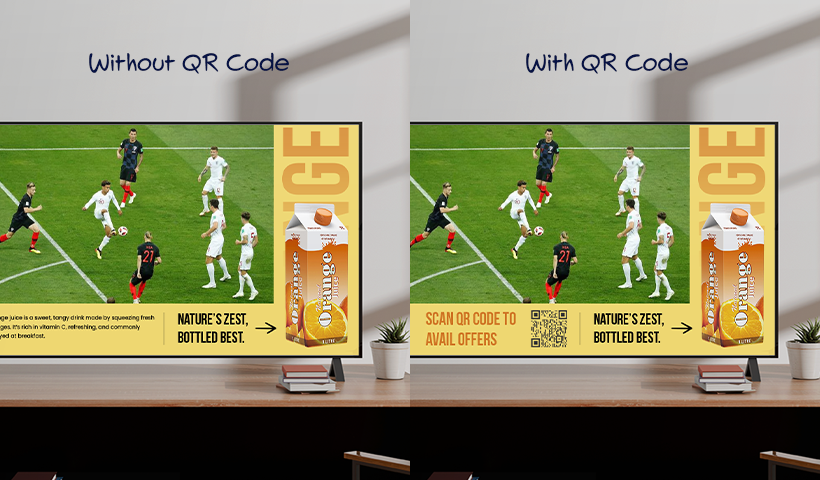
This is the most critical catalyst as QR codes make your ads shoppable, interactive, and measurable.
Here are a few use cases:
🛒 Shoppable Ads: Turn a 20-second promo into a storefront where viewers can scan and make instant purchases.
🤩 Exclusive Offers: Share limited-time discounts that feel urgent and personalized.
📊 Live Polls/Surveys: Engage viewers during live events or shows.
📲 Personalized Content: Let users scan for curated playlists, product recommendations, or bonus content.
Pro Tips for QR Code Placement in OTT/CTV Ads
- Keep it visible for 15–30 seconds, long enough for a scan.
- Use motion graphics or arrows to draw attention.
- Optimize the landing page for mobile speed. If it lags, you lose the conversion.
🔎 Fact check: Interactive CTV ads, such as those incorporating QR codes, have been shown to significantly enhance viewer engagement compared to standard video ads.
5. Track, measure, and improve performance
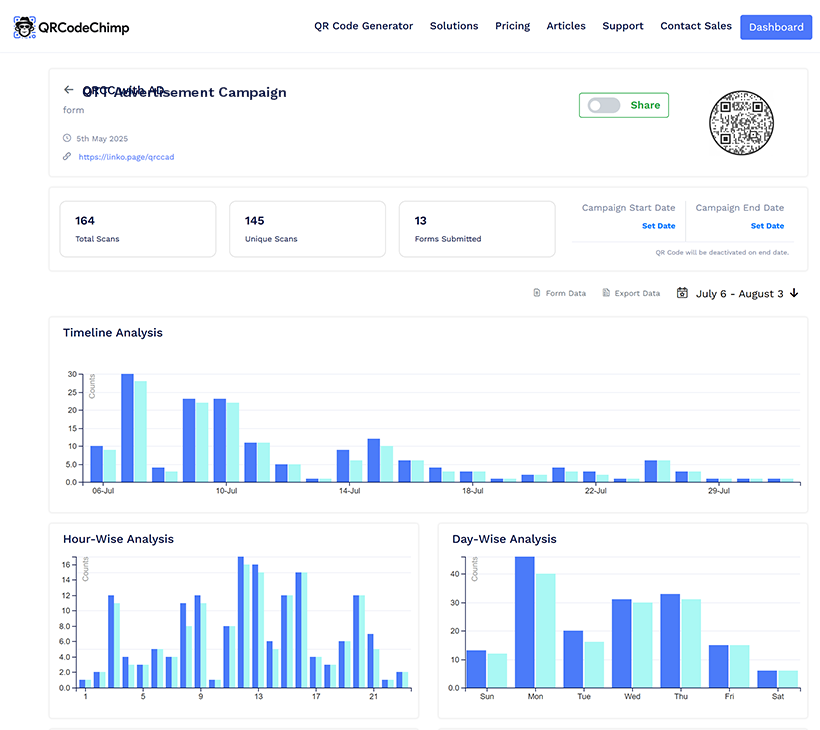
Unlike traditional TV, CTV lets you measure. And QR codes add another layer of real-time analytics:
✔️ Total scans
✔️ Time and frequency of scans
✔️ Device type used for scanning
✔️ Location clusters (regional data)
This data helps marketers see not just who watched, but who engaged. Combined with A/B testing, you can optimize creatives, CTAs, and landing pages for maximum ROI.
🔎 Fact check: Brands that used interactive CTV ads with measurement tools saw a 47% lift in purchase intent.
Beyond the basics: Trends to watch
To stay ahead, brands should also keep an eye on emerging trends:
Cross-device journeys: A user may scan on TV, explore on mobile, and convert on desktop. Designing QR-led experiences with this funnel in mind ensures higher conversion rates.
Personalized QR journeys: Dynamic QR codes can redirect different users to different experiences based on time, region, or campaign source.
Retail media integrations: More streaming platforms are linking with retailers (e.g., Amazon Prime + Amazon Fresh). QR codes will become the fastest way to connect ads with shopping baskets.
AI-powered optimization: Future OTT/CTV campaigns will utilize AI to personalize creatives and QR journeys in real-time.
Conclusion
OTT and CTV ads are no longer optional; they’re the backbone of modern advertising strategies. But with rising competition and ad clutter, brands must go beyond reach and focus on engagement, measurability, and ROI.
That’s where QR codes change the game. They bridge offline (TV) with online (mobile/e-commerce), make ads interactive, and deliver real-time campaign intelligence.
At QRCodeChimp, we help brands create measurable, interactive, and conversion-focused QR codes that transform OTT and CTV ads into performance-driven campaigns.
Frequently asked questions
What is the difference between OTT and CTV ads?
OTT = content streamed online (Netflix, Disney+ Hotstar).
CTV = devices that deliver OTT content (smart TVs, Roku, Fire TV).
Why are QR codes important in OTT/CTV ads?
They turn passive ads into interactive, measurable experiences—letting viewers scan, shop, or engage instantly.
How can I measure success with QR codes?
QRCodeChimp analytics lets you track scans, devices, timing, and regional clusters to optimize your campaign.
What’s the future of OTT/CTV ads?
Interactive, shoppable, personalized, and cross-device journeys—where QR codes are the bridge between viewing and action.
You may also like
Approval-Based Digital Business Cards: A Smarter Workflow for HR Teams
Discover how approval-based digital business cards help HR teams ensure branding consistency, prevent misuse, and manage employee cards at scale.
Best Digital Business Card Makers for 2026 – Secure, Enterprise, and Scalable
Discover the best digital business card platforms for 2026. Compare the top 8 solutions with features like branding, CRM integration, analytics, and enterprise-grade security to find the right fit for your team or business.
How a Consumer Electronics Brand Fixed Its Post-Purchase Gap Using Form QR Codes
Learn how a consumer electronics brand improved warranty registration and post-purchase engagement using Form QR Codes. Discover the strategy, implementation, and results.
QRCodeChimp’s Analytics Dashboard: A Step-by-step Guide
A guide to QRCodeChimp’s analytics dashboard. Leverage the unique advanced features and metrics to optimize your marketing campaigns.
Most Popular
Contact Sales