Valentine’s Day is one of retail’s most revealing moments, compressing discovery, emotion, and urgency into a high-stakes window. When a strategy succeeds here, it works everywhere. In 2026, that intensity is playing out at record scale: the National Retail Federation projects spending to reach $29.1 billion, led by jewelry ($7B), dining ($6.3B), and apparel ($3.5B).
As retailers compete for this historic volume, the real differentiator is the ability to convert massive physical intent into measurable digital action. This isn’t a new experiment; it’s a tipping point.
Looking back at 2025, one signal became impossible to ignore: QR codes evolved from tactical add-ons into strategic infrastructure. No longer a pandemic-era novelty, they are now the dependable bridge connecting the shelf to the screen. For Valentine’s Day 2026, the question is no longer whether QR codes belong in the mix. It’s how thoughtfully they are deployed.
- QR codes reached behavioral maturity in 2025
- What 2025 retail data tells us (and why it matters)
- Where QR codes delivered the most value
- GS1 Digital Link and the death of the Barcode
- What does this mean for Valentine’s Day 2026?
- How to use QR codes in Valentine’s Day 2026 across industries to maximise retail sales?
- The larger trend taking shape
- From proof to precision
- Frequently asked questions
QR codes reached behavioral maturity in 2025
QR codes were widely used for over a decade, but 2025 was when they truly became a revenue-driving channel. QRCodeChimp’s internal data showed that QR scanning became habitual rather than situational. Approximately six in ten consumers reported scanning QR codes daily, while more than nine in ten reported scanning at least once a month. Crucially, most of these scans occurred at moments closely tied to purchasing decisions rather than casual browsing.
This shift matters because habit removes friction. When consumers no longer need to “decide” to scan, QR codes become a reliable design element. By the end of 2025, scanning a QR code had become as natural as tapping a link or swiping a card.
For Valentine’s Day 2026, this behavioral baseline allows retailers to design QR-led experiences with confidence rather than caution.
What 2025 retail data tells us (and why it matters)
2025’s retail performance data shows that QR codes didn’t just grow in adoption; they became a measurable driver of in-store influence and purchase intent.
Key QR-led market indicators from 2025:
- Retail QR scans grew approximately 40 – 45% year over year, driven largely by in-store signage, product packaging, and printed promotions.
- Around 60 – 65% of retailers reported direct or assisted sales uplift from QR-enabled campaigns.
- Dynamic QR codes increasingly replaced static ones, particularly for seasonal and promotional use cases.
These figures are telling because they indicate intentional use. QR codes performed best when tied to a clear outcome, such as unlocking an offer, guiding a gift decision, or completing a purchase.
Internal, directional data from QRCodeChimp reflects similar patterns in 2025 at the platform level:
- Approximately 74 million scans were recorded across retail and consumer-facing use cases in 2025.
- Over 1.5 million QR codes were created, with seasonal campaigns showing significantly higher scan density.
- Roughly 57K forms were submitted, indicating that scans increasingly led to meaningful engagement.
The implication is straightforward: QR codes are no longer just traffic drivers. They are conversion and data-capture mechanisms.
Where QR codes delivered the most value
One of the clearest lessons from 2025 is that QR codes perform best at the seam between offline and online experiences.
In physical retail environments, QR codes extended moments that were previously unmeasurable. Shoppers scanning in-store displays could compare products, explore curated Valentine’s collections, or access exclusive bundles without leaving the aisle. Packaging QR codes enabled post-purchase engagement, like reviews, care instructions, or personalization, turning a static product into an ongoing touchpoint.
On the digital side, QR codes added depth rather than redundancy. Email campaigns that incorporated scan-based interactions consistently showed stronger engagement than traditional “click-through” flows, particularly on mobile devices. The scan created a moment of intent rather than passive consumption.
This hybrid behavior (physical trigger, digital continuation) became one of retail’s quiet advantages in 2025.
GS1 Digital Link and the death of the Barcode
While QR codes have historically coexisted with the traditional UPC barcode, 2026 marks the critical ramp-up toward “Sunrise 2027” – the global industry initiative to transition to 2D barcodes at the point of sale.
The GS1 Digital Link standard is the engine behind this shift. It allows a single QR code to serve a dual purpose: it handles the “beep” at the checkout counter for price lookup while also acting as a web-enabled gateway for the consumer.
For Valentine’s Day 2026, this means retailers no longer need to clutter packaging with multiple codes. One high-performance QR code can now manage inventory, provide allergen and sourcing data, and launch a personalized romantic video message for the gift recipient.
By adopting GS1-compliant QR codes now, retailers aren’t only engaging customers but also improving their supply chain efficiency.
Consumer behavior signals retailers can’t ignore
Three consumer behavior patterns from 2025 are especially relevant when forecasting Valentine’s Day 2026.
- Absolute mobile dominance: Nearly all QR scans, estimated between 95 and 98%, happen on smartphones. This means QR experiences are unforgiving. If the landing experience is slow, cluttered, or poorly optimized, the opportunity is lost.
- Scans signal intent: Consumers don’t scan casually. They scan to decide, compare, redeem, or personalize. Across multiple studies, QR-led journeys show higher intent density than many paid digital channels. This makes QR traffic disproportionately valuable.
- Personalization has shifted from “nice to have” to expected: Static QR destinations increasingly feel blunt. Consumers now expect relevance based on location, timing, or context. This is why dynamic QR usage surged in 2025 and will likely become standard in 2026.
The “Post-Scan” standard.
In 2026, “precision” extends to the creative experience itself. The gold standard for Valentine’s engagement is no longer a static landing page, but an immersive Augmented Reality (AR) moment. Whether it’s a virtual “flower bloom” appearing on a jewelry box or a “virtual try-on” for a luxury watch, AR transforms the scan from a utility into a digital gift in its own right.
What does this mean for Valentine’s Day 2026?
Valentine’s Day is a decision-making event rather than a browsing event. Shoppers are time-constrained, emotionally driven, and often buying for someone else. QR codes help remove friction at precisely that moment. The most successful retailers in 2026 will use QR codes deliberately to simplify choice, reduce uncertainty, and extend the experience beyond the shelf.
The takeaway is subtle but important: QR codes should orchestrate the experience, not decorate it.
How to use QR codes in Valentine’s Day 2026 across industries to maximise retail sales?
Apparel & Fashion – Curb decision anxiety
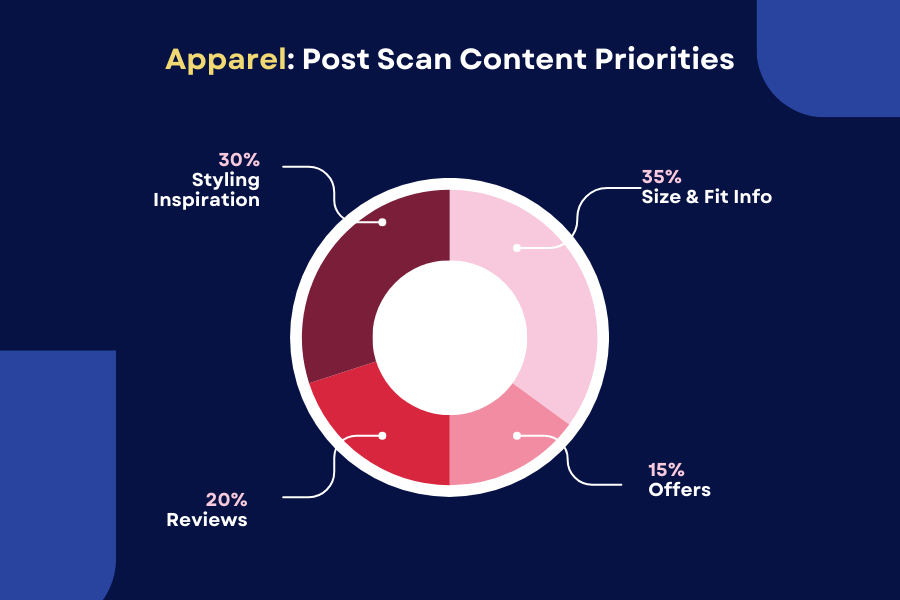
- Use QR codes on tags or mirrors to show styling options or gift pairings.
- Link scans to size availability or alternative recommendations.
- Keep journeys short and decisive.
Beauty & Personal Care – Eliminate gifting risk
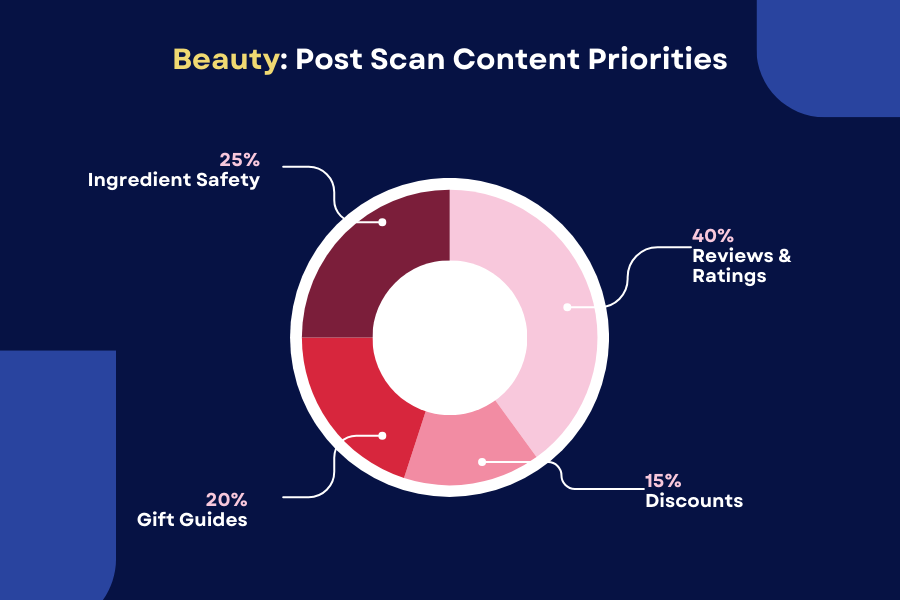
- Connect QR codes to usage videos or ingredient explainers.
- Unlock Valentine’s bundles or limited editions via scan.
- Use personalization to reduce gifting hesitation.
Food, Beverage & Restaurants – Reduce waiting time
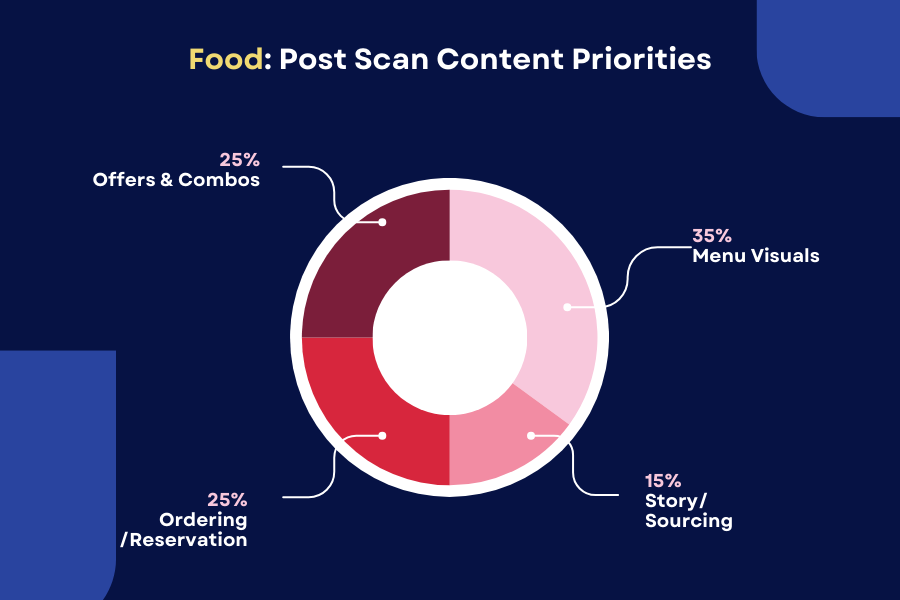
- Add QR-enabled Valentine’s menus with visual previews.
- Implement scan-to-reserve or scan-to-order flows during peak hours.
- Extend couple-focused offers accessed via table or counter QR codes.
Gifting & Specialty Retail – Extend emotional value
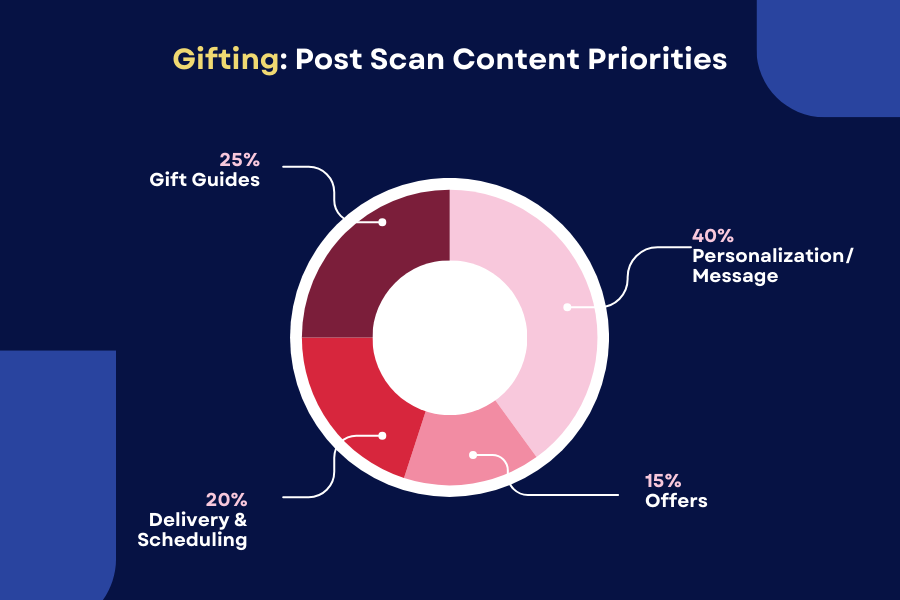
- Link packaging QR codes to stories, notes, or personalization.
- Offer post-purchase QR experiences that extend the emotional value.
- Use in “Add a message” or “schedule delivery” flows.
E-commerce & D2C Brands – Extend customer lifetime
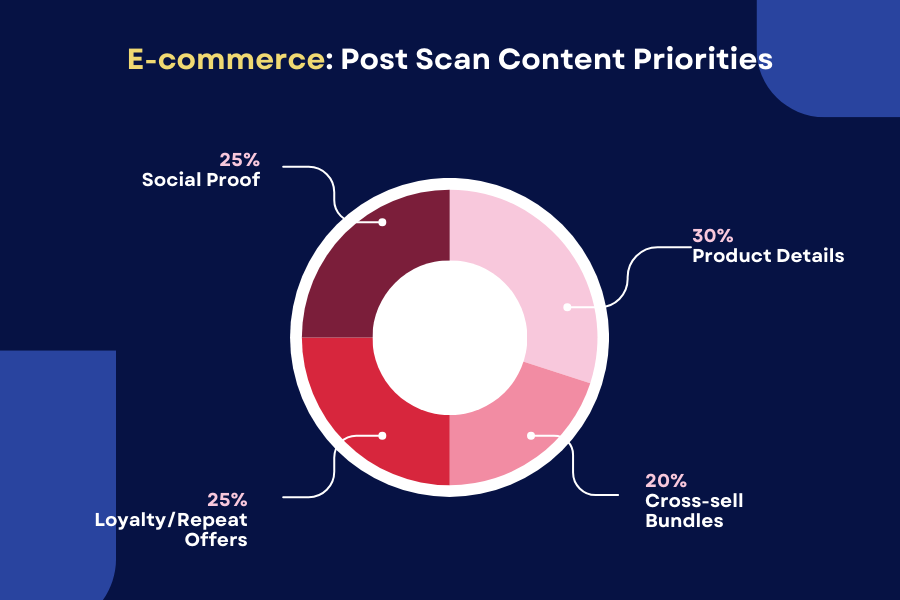
- Add QR codes in delivery boxes to drive repeat purchases.
- Tender scan-to-join loyalty or referral programs.
- Use dynamic QR codes to update seasonal landing pages without reprinting.
The larger trend taking shape
Beyond Valentine’s Day, 2025 quietly repositioned QR codes as first-party data infrastructure. They offer a privacy-friendly way to capture intent, bridge channels, and reduce reliance on disappearing third-party signals.
As analytics, personalization, and immersive experiences evolve, QR codes are increasingly becoming the trigger that activates those systems.
From proof to precision
Valentine’s Day 2025 proved that QR codes drive measurable engagement, not just scans. Valentine’s Day 2026 will reward retailers who refine that insight – designing QR experiences that are faster, more relevant, and more intentional.
QR codes are no longer about convenience alone. They’re about connection, clarity, and control. And in a retail moment where attention is short and decisions are rushed, that makes all the difference.
Frequently asked questions
Why use dynamic QR codes instead of static ones for Valentine’s Day?
Valentine’s Day campaigns move fast. Dynamic QR codes let you update destinations, such as offers, gift guides, or last-minute deals, without reprinting. They also provide scan data, helping you see what’s working in real time.
How does GS1 Digital Link change packaging strategy?
It replaces multiple codes with one. A single QR code can work at checkout and, when scanned by a customer, launch your digital brand experience, reducing clutter and improving efficiency.
Are QR codes secure for high-value Valentine’s purchases?
Yes, when implemented correctly. Modern QR experiences use HTTPS, branded domains, and clear destinations, reducing scan hesitation and building trust at the moment of purchase.
What causes post-scan drop-off, and how can retailers reduce it?
Slow or poorly optimized mobile pages. If a page takes more than two seconds to load or lacks a clear CTA, users leave. Fast load times and a single, focused action keep engagement high.
Can QR codes support non-traditional Valentine’s shoppers, like Galentine’s Day buyers?
Yes. Dynamic QR codes can display different content based on date or context, showing group bundles one day and last-minute gifts the next, without changing the printed code.
You may also like
9 Networking Tips Every Introvert Needs
Here are 9 networking tips for introverts to win clients without small-talk burnout: just prepare well, craft a short intro, share digital business cards, and follow up with confidence!
QRCodeChimp’s Analytics Dashboard: A Step-by-step Guide
A guide to QRCodeChimp’s analytics dashboard. Leverage the unique advanced features and metrics to optimize your marketing campaigns.
Link Click Analytics in QRCodeChimp: How To Find Your Top Performing Links
Learn how to track link click analytics in QRCodeChimp, identify top-performing links, and optimize QR code campaigns using link-level insights and analytics.
How to Ensure Instant Student Access to Recorded Lectures?
Learn how to give students instant access to recorded lectures using dynamic QR codes. Reduce LMS friction, improve findability, and boost engagement.
Most Popular
Contact Sales