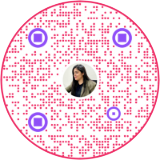
A circular QR code, also called a round or circle QR code, is a standard QR code styled in a circular shape instead of the usual square. It stores the same type of data and works like a regular QR code, while the round design helps it stand out, attract attention, and reinforce your brand.
Most QR codes are still square, which means many of them look similar. A round QR code breaks that pattern. Platforms like Facebook Messenger and Kik have historically used circular scan codes for years, and the same idea works for businesses that want their codes noticed on packaging, print material, business cards, product labels, and campaigns.
This guide covers how to create a circular QR code with your logo, the best practices that keep it scannable, and the mistakes that quietly reduce scan reliability.
Why should you create a Circular QR Code?
You can build a solid QR code strategy, put your codes everywhere, and still get fewer scans than expected. One common reason is visibility. People see many QR codes across stores, packaging, ads, restaurants, events, and business cards. A plain square code may not always give them enough reason to stop.
A circular shape makes the QR code look more intentional and designed. That can encourage more people to notice and scan it. Here is what that shape does for your campaigns.
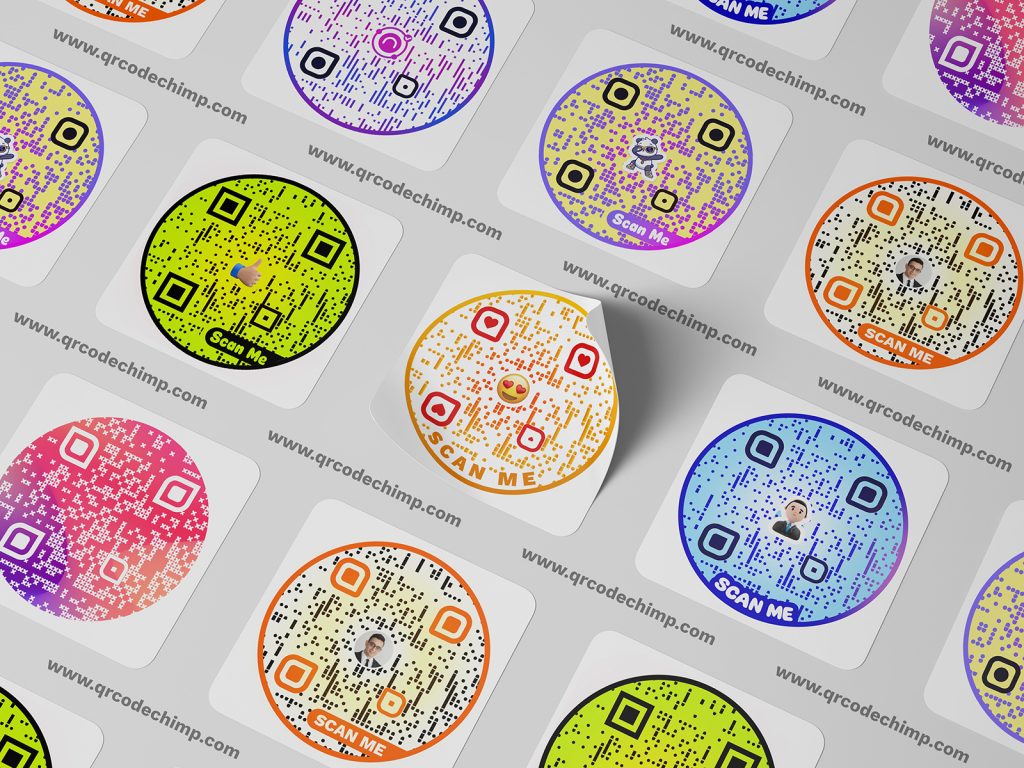
- Gets more attention: A round code stands out in a sea of square ones, so more people notice it and act.
- Strengthens your brand: Paired with your logo and brand colors, a circular code reads as a designed asset rather than a generic add-on, which improves recognition and recall.
- Works across every touchpoint: Use the same branded shape on packaging, flyers, business cards, event signage, and product labels for a consistent look.
If you are weighing a circle against other options like hearts, stars, or rounded squares, our guide on how to choose the right QR code shape breaks down when each one works best.
Do Circular QR Codes Scan Reliably?
Yes. A circular QR code can scan reliably when the core QR pattern remains clear. The shape changes the visual design, but the camera still reads the QR code pattern inside it.
To keep it reliable, follow three rules: keep strong contrast between the code and its background, leave a clear margin around the code, and print it large enough to scan from the expected distance. For most printed use cases, keep it at least 0.8 x 0.8 inches, and go larger when people scan from farther away.
Always scan the finished code on a few Android and iOS phones before you print or publish it.
Making the code dynamic adds a safeguard. If you ever need to change where it points, you update it in your dashboard instead of reprinting anything. You can also see how the campaign is performing instead of guessing.
How to Generate a Circular QR Code With a Logo
QRCodeChimp is a free circular QR code generator that lets you create round and circle QR codes with your logo, no design skills needed. Circle is the default shape across QRCodeChimp’s 60+ shape options, so most new codes start round unless you switch them.
Every code can be made dynamic and trackable, so you can edit the link and view scan analytics after it is printed.
Here is how to make a circular QR code with a logo.
Step 1: Open the QR code generator
Go to QRCodeChimp and pick the QR code type you need. For this walkthrough, we will create a circle-shaped URL QR code.

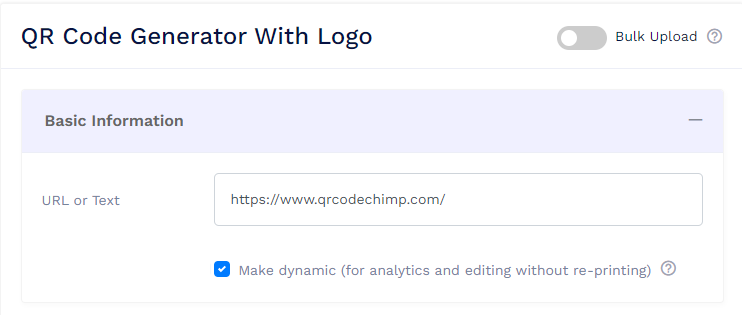
Step 2: Enter your URL
Add the link you want the QR code to point to.
Note: Check the “Make dynamic” box to create a dynamic QR code you can edit and track later.
Step 3: Apply the circle shape
QRCodeChimp gives you 60+ QR code shapes. Open the QR Shapes tab and select the Circle shape to make your code round.
You can also customize it further with colors, stickers, shapes, and other design options.
Step 4: Add your logo
Now add your logo:
- Go to the “Logos” tab in the Design, Color, and Decorate QR Code section.
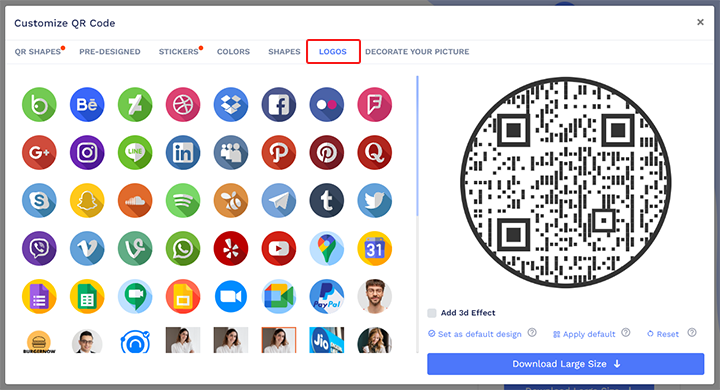
2. Click “Add Your Own Logo.”
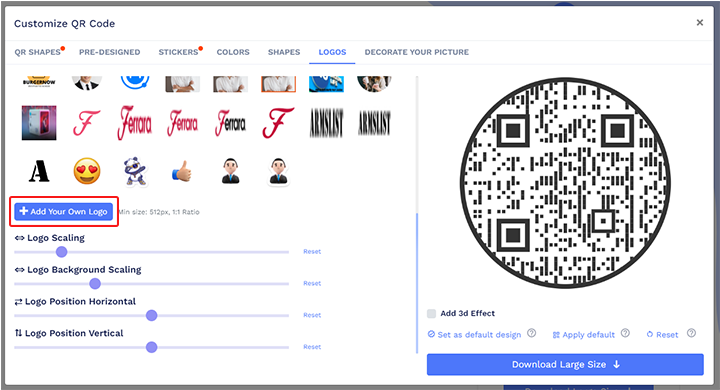
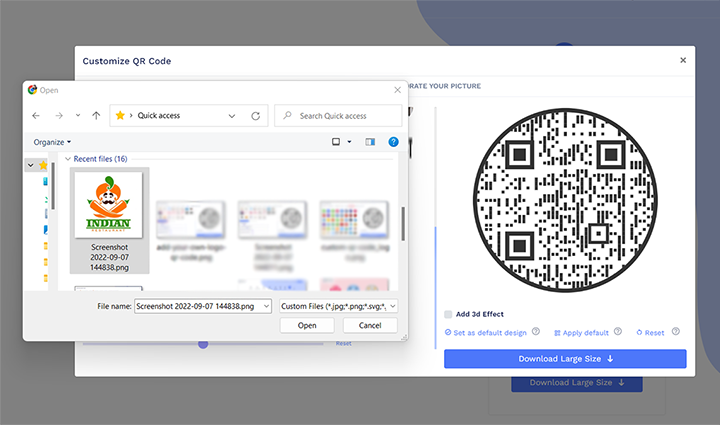
3. Upload your brand’s logo from your device.
4. Resize and position it using Logo Scaling, Logo Background Scaling, Logo Position Horizontal, and Logo Position Vertical.
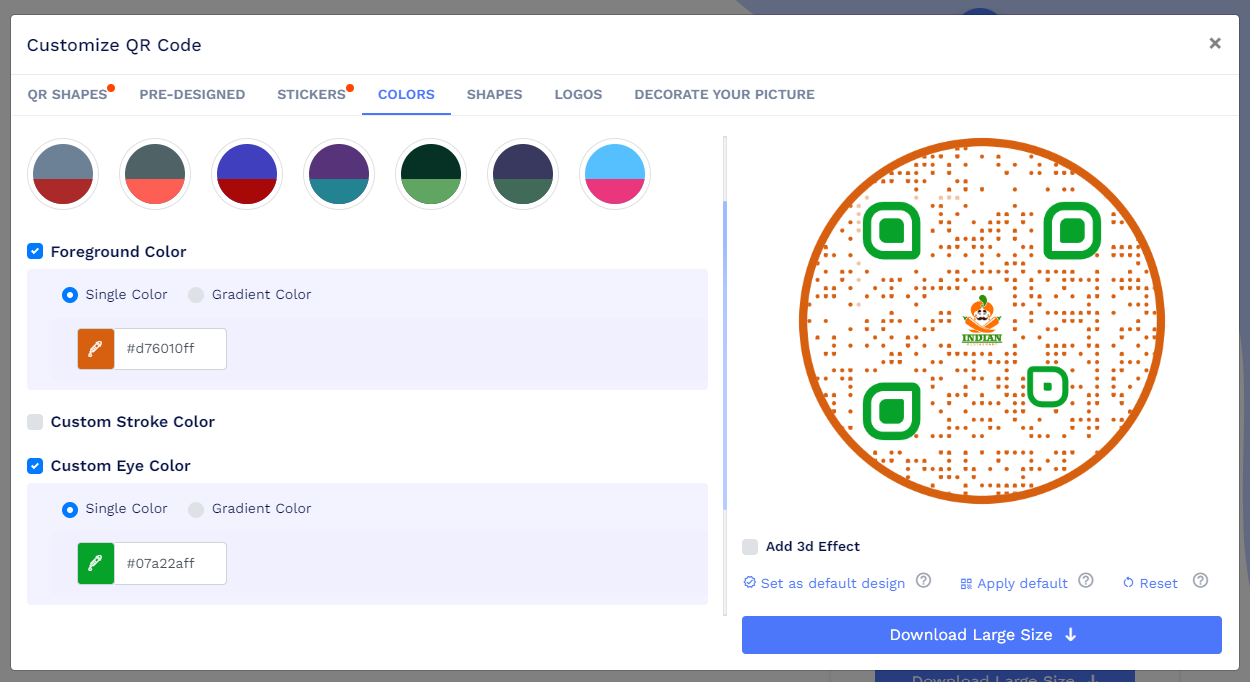
Keep the logo visible, but do not make it so large that it blocks too much of the QR code pattern.
Step 5: Save and test your QR code
Once done, click the “x” icon. Then click “Save QR Code,” enter a name, select a folder if needed, and click “Save.”
Before using it in a campaign, scan the QR code on multiple devices to confirm that it opens the correct destination.
Turn your logo or image into a circular QR code
You can also build the QR code directly on top of a logo or picture. Here is how.
- Go to the “Decorate Your Picture” tab in the Design, Color, and Decorate QR Code section.
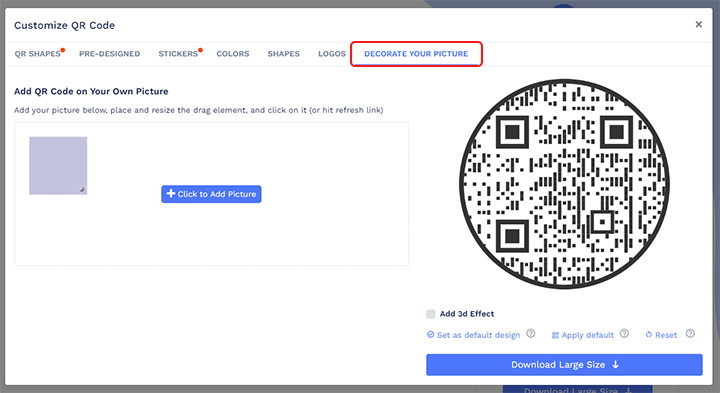
2. Click “Click to Add Picture” and select the logo or image from your device.
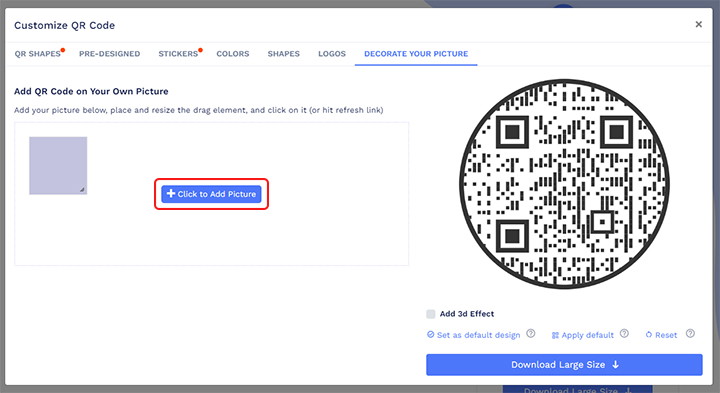
3. Drag and resize the element to position the QR code on the image.
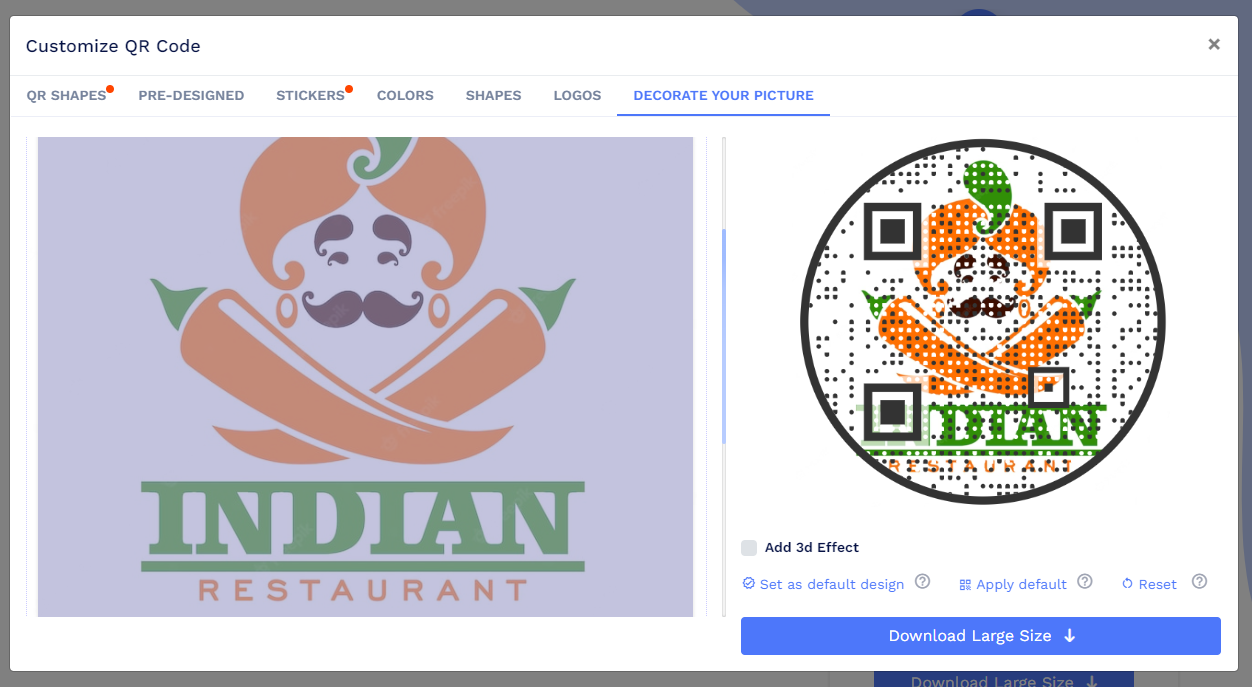
For the image to stay visible, keep the code’s border and body scaling low. Go to the QR Shapes tab and reduce the Shape Border Size to its minimum, then reduce Padding Around Eyes. In the Shapes tab, lower Body Type Scaling and Eye Scaling as well.
Note: Do not set these values to zero, or you can hurt the code’s scannability.
Finally, open the Colors tab and match the code’s color to your logo.
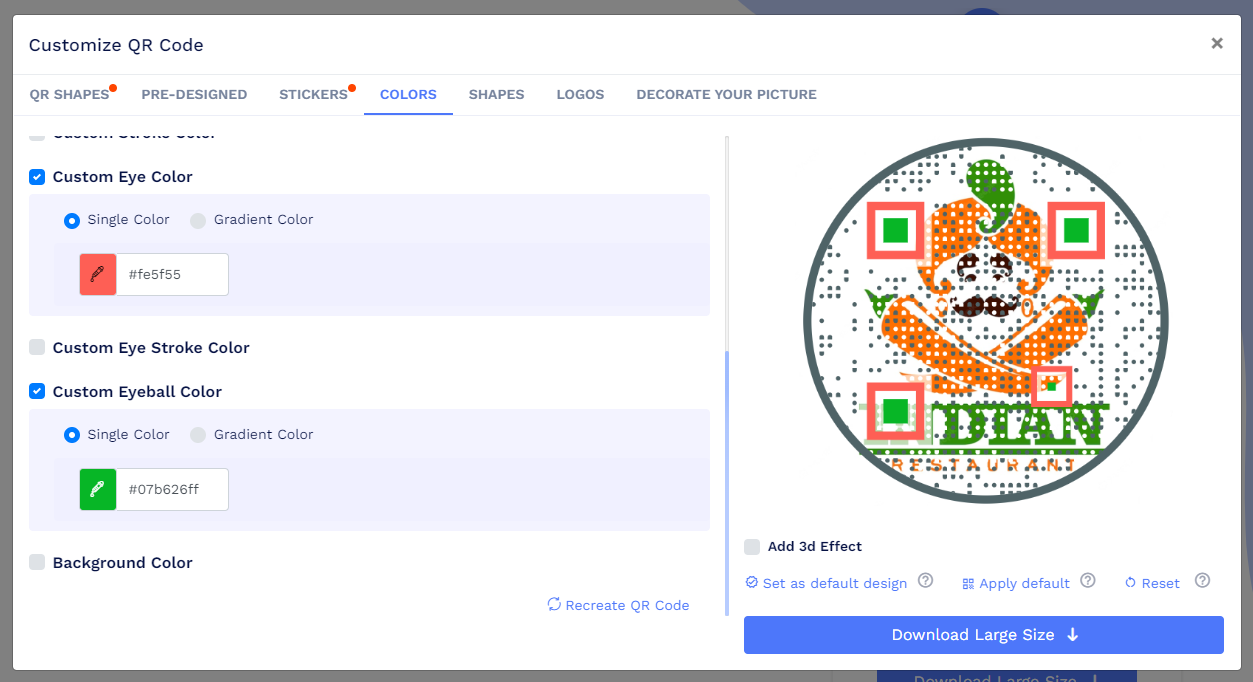
That is it. Click the “x” and save your circular QR code.
You can also watch this short video on converting an image into a QR code.
Examples of Circular and Rounded Scan Codes
Circular and rounded scan codes are not a gimmick. Some major platforms have used circular or rounded designs to make their scan experiences more recognizable and brand-friendly. That is a good sign that people are comfortable scanning codes that are not plain squares.
Kik
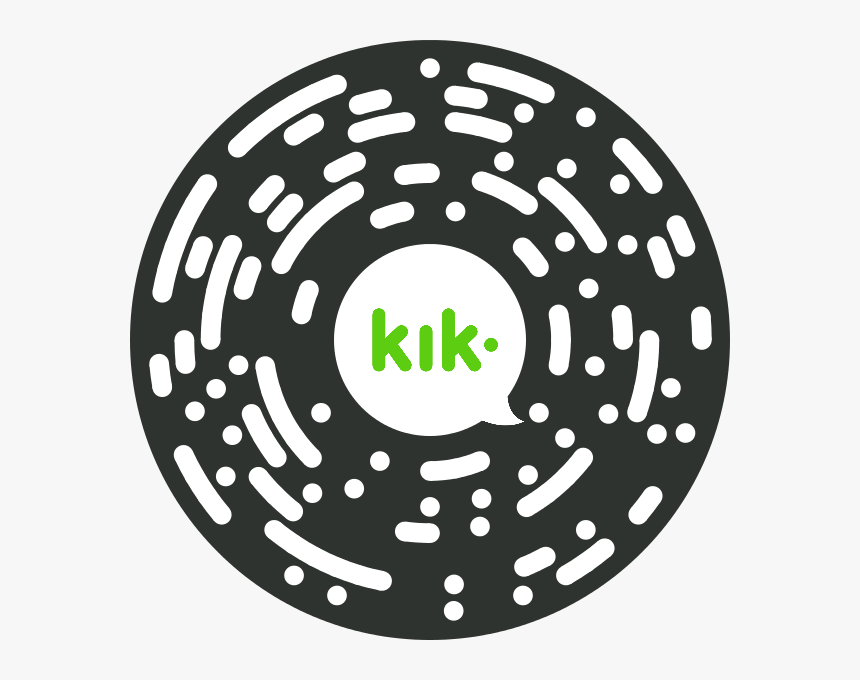
Kik launched Kik Codes in 2015, a circular scan code that let users add friends, join groups, and connect with bots.
Facebook Messenger
Facebook Messenger has used circular profile codes that people could scan to connect on Messenger.
Note: Meta discontinued Messenger Codes in 2019.

WeChat uses a circular Mini Program code that users scan to open a mini program inside the app.

Snapchat
Snapcodes are squircle-shaped, which means they sit between a square and a circle. The idea is similar: move past the plain square and make the code more recognizable.

Apple
Apple’s App Clip Code is a circular code that lets iPhone users open an App Clip by scanning it.
Best Practices for Creating a Circular QR Code
A circular QR code only works if it looks good and scans on the first try. These practices keep both in check.
➡️ Add your logo when branding matters
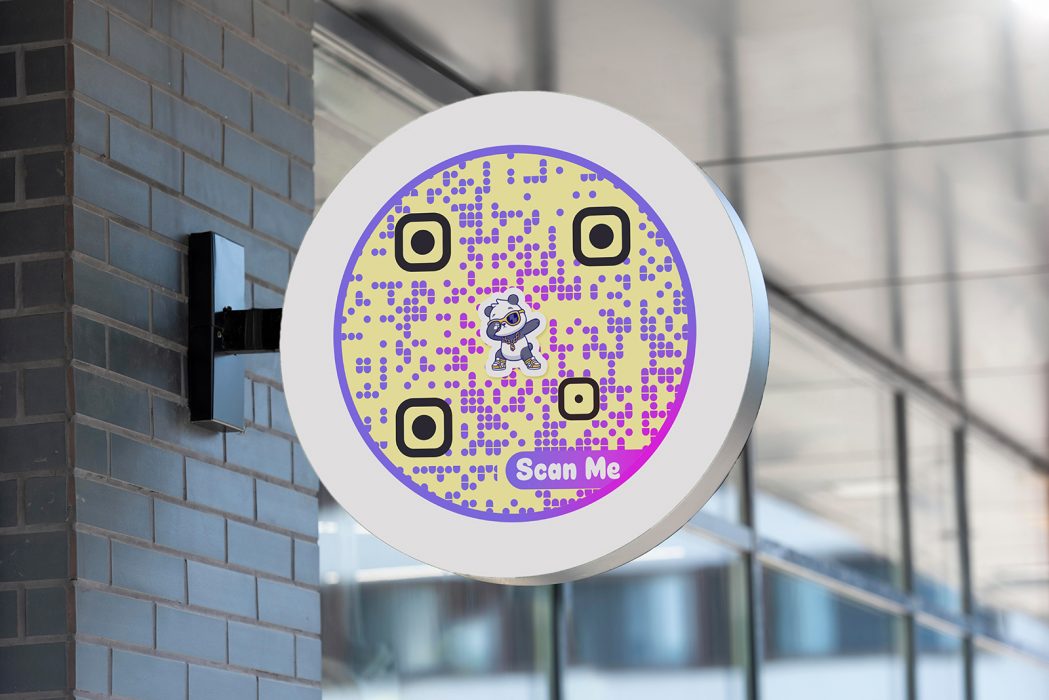
Add your logo when the QR code appears on branded assets such as packaging, business cards, product labels, event signage, brochures, or retail displays. It makes the code instantly recognizable as yours and ties each scan back to your brand instead of an anonymous black-and-white square.
➡️ Use a dynamic QR code for campaigns
A dynamic QR code is the practical choice for most business campaigns. It gives you two things a static code cannot:
- Edit the destination URL without reprinting the code.
- Track scans and view analytics by time, location, and device.
That means a flyer you printed last month can point somewhere new today, and you can see exactly how each campaign performs. QRCodeChimp’s free plan includes up to 10 dynamic QR codes and unlimited static codes, with more dynamic codes available on paid plans.
➡️ Add your brand colors
Match the code’s colors to your brand palette. A circular code in your brand colors reads as a designed asset and reinforces recognition every time someone sees it.
Keep contrast in mind. A darker QR code on a lighter background usually scans better than a light code on a dark background.
➡️ Use a symmetrical logo or image
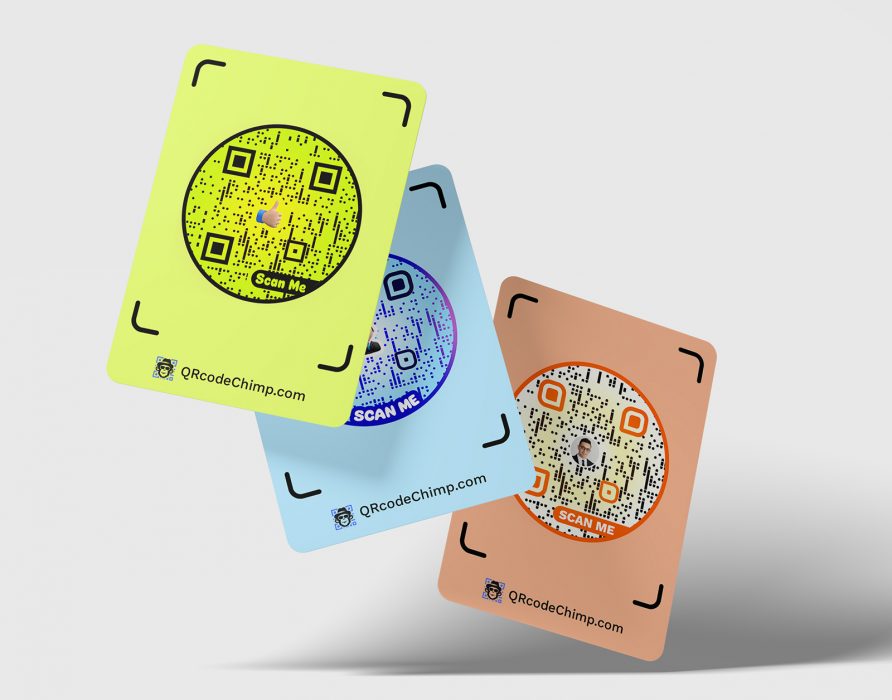
If you are placing a logo or picture inside the code, choose a circle, square, or squircle shape. Symmetrical images sit cleanly inside a round code. Off-balance shapes are harder to position and can throw off the look.
➡️ Balance the border and body scaling
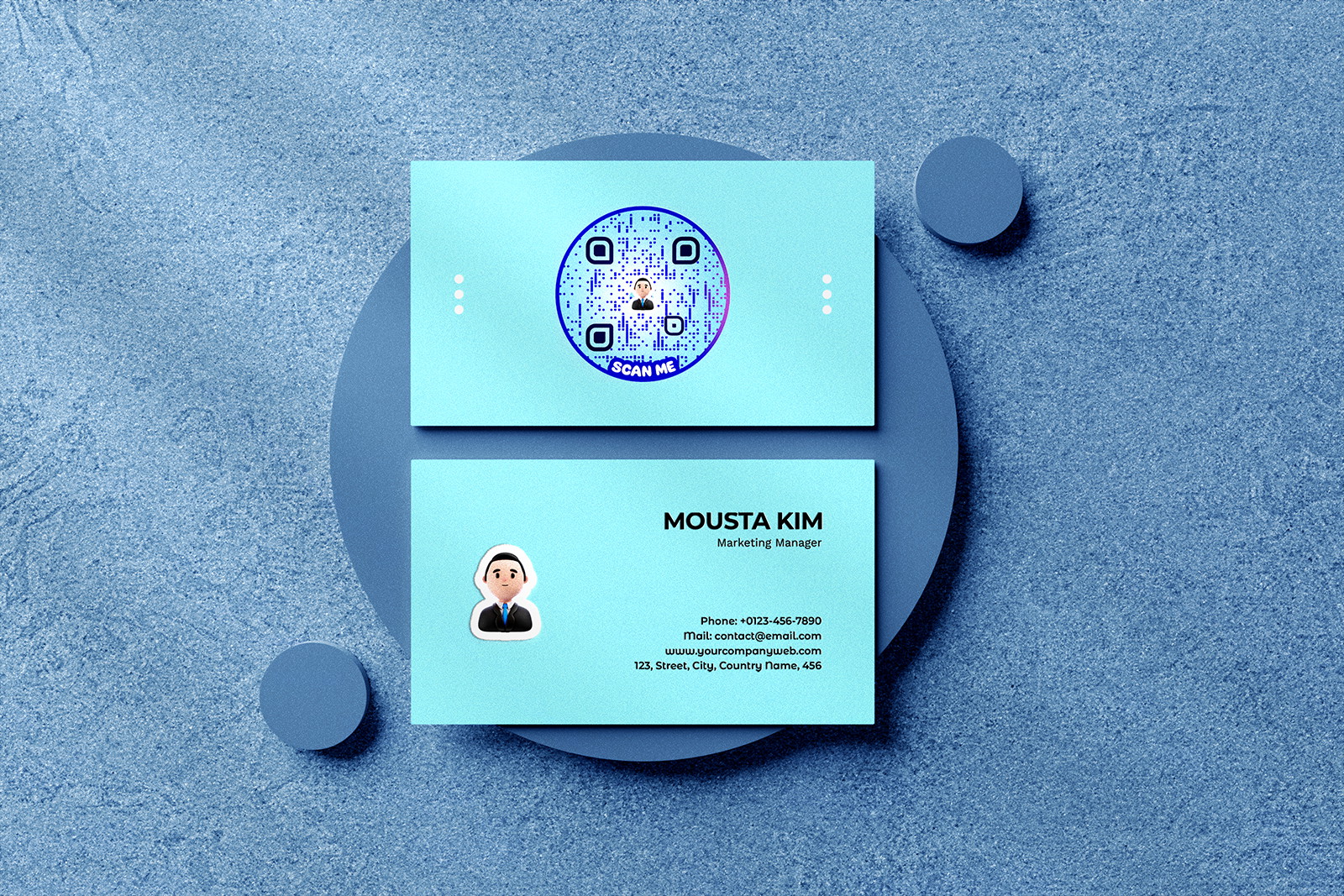
Shape Border Size, Body Type Scaling, Padding Around Eyes, and Eye Scaling all shape the final look. Adjust them so your logo stays visible without shrinking the pattern so much that the code gets hard to scan.
Position the code precisely on your image too, since placement affects both the look and the scan.
➡️ Keep enough clear space around the code
Leave enough empty space around your circular QR code so phone cameras can detect it quickly. Avoid placing text, graphics, icons, or borders too close to the code.
This is especially important on packaging, posters, flyers, menus, stickers, and business cards where space is limited.
➡️ Test on multiple devices before printing
Scan the finished code on a few Android and iOS phones first. Heavy customization can occasionally hurt scannability, so confirm it works before you commit it to print.
Circular QR Code Mistakes to Avoid
A few small choices can quietly break a circular QR code. Avoid these mistakes before publishing or printing your design.
🙅 Do not use inverted colors without testing
You can invert the colors, such as using a light code on a dark background, and it can look striking. But many scanners may struggle with it.
A dark code on a light background is usually the safer choice. If you use inverted colors, test the QR code across multiple devices and lighting conditions before printing.
🙅 Do not set the border or body scaling to zero
It is tempting to drop the border and body scaling all the way down to reveal more of your logo. Do not.
At zero border scaling, the circular shape disappears. At zero body scaling, the code’s internal pattern vanishes. Either way, you lose the design and, in some cases, the scan. Reduce these settings, but always keep them above zero.
🙅 Do not make the logo too large
A logo improves branding, but it should not dominate the QR code. If the logo covers too much of the code, scanning may become slower or fail on some devices.
Keep the logo centered and balanced with enough visible QR pattern around it.
🙅 Do not place the QR code on a busy background
Avoid placing a circular QR code over complex patterns, photos, gradients, or low-contrast backgrounds. Busy backgrounds can make the QR code harder for scanning apps to detect.
If your design requires a background image, use a clean container, sticker, or light background behind the QR code.
🙅 Do not print before testing
Always test your circular QR code before printing. Check it on different devices, lighting conditions, and scan distances.
For high-volume print campaigns, test one sample print before sending the final file for bulk printing.
Create Your Circular QR Code
A circular QR code is a small design change that can make your codes look more intentional and noticeable on packaging, print, business cards, product labels, and campaign signage. Add your logo when branding matters, keep it dynamic so you can update and track it, and test it before it goes live.
Frequently Asked Questions
What is a circular QR code?
A circular QR code is a standard QR code styled in a circle instead of the usual square shape. It stores the same type of data and works like a regular QR code, while the visual design makes it look more branded and noticeable.
Are round, circle, and circular QR codes the same thing?
Yes. Round QR code, circle QR code, and circular QR code all describe the same idea: a QR code styled in a circular shape. You can create any of them the same way in QRCodeChimp.
Do circular QR codes scan properly?
They do, as long as you keep good contrast, enough clear space around the code, and a large enough print size. Test the finished code on a few phones before you publish it.
Can I create a circular QR code for free?
Yes. QRCodeChimp’s free plan lets you design and download unlimited static QR codes and up to 10 dynamic, editable, trackable QR codes with 1,000 scans a month, at no cost.
Can I add my logo to a circular QR code?
Yes. You can upload your own logo, position it inside the code, and match the code’s colors to your brand.
What is the best circular QR code generator?
A good circular QR code generator should let you choose round shapes, add your logo, customize colors, create dynamic QR codes, and track scans. QRCodeChimp supports these features and lets you start for free.
You may also like
How to Group Cards in QRCodeChimp Entra ID Setup
Learn to organize digital business cards effectively using QRCodeChimp Entra ID grouping. Simplify card management by group, filter, or all-in-one.
Google Review Cards: Collect Reviews by Scan or Tap
Google Review cards use a QR code, NFC tap, or both to send customers to your review page. Learn how they work, how to create one, and where to use them.
Field Locking for Digital Business Cards: Share Access Without Losing Control
Learn how QRCodeChimp’s field locking for digital business cards helps teams control edits, protect brand details, and maintain consistency at scale.
How to Save a Digital Business Card on iPhone and Android?
Want to know how to save digital business cards on your smartphone? Explore our article to learn the easy steps to save a digital business card on iPhone and Android.
Most Popular
Contact Sales