Conferences are expensive in more ways than we admit. Time, tickets, travel, and mental bandwidth – all add up. Yet professionals continue to attend them, expecting tangible outcomes. While 80% of event attendees report making at least one valuable connection, far fewer turn those introductions into lasting professional relationships. That’s the real problem with conference networking. People talk, but conversations rarely become relationships.
Most professionals treat conferences like speed-networking: maximize introductions, minimize depth, and then wonder why nothing sticks. Real connections aren’t built by being louder or better at small talk, but by being intentional before the event, present during it, and strategic after it.
This guide shows you how to do exactly that, so your next conference delivers real ROI instead of just fatigue.
Building connections at conferences: Strategies for Before, During, & After
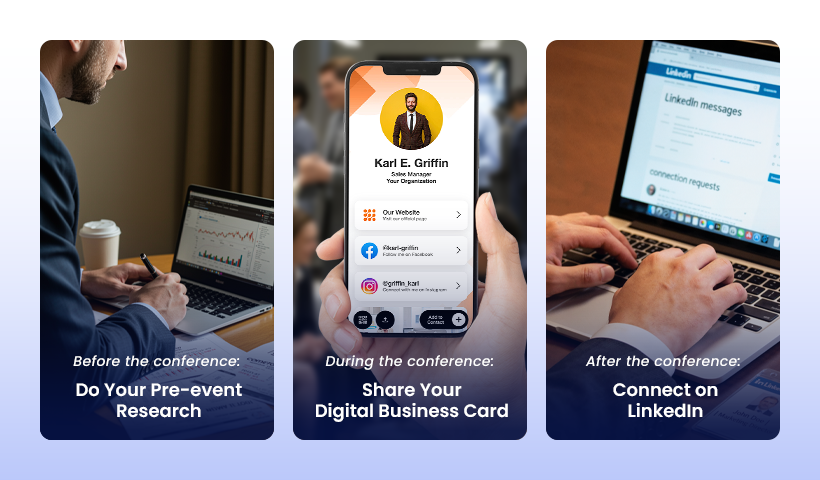
Turning conference conversations into real professional relationships requires a clear strategy, like the following:
⬅️ Before the conference:
- Do your pre-event research: You must prepare before attending any networking event. Research the event and all attendees to learn who they are and their backgrounds; this will help you choose the right people to approach and spark genuine conversations without sounding rehearsed.
- Prepare your introduction: Prepare a concise, engaging 15-30 second “elevator pitch,” clearly communicating who you are, what you do, and what you’re interested in. A strong introduction helps you make a lasting first impression, leading to meaningful conversations and higher chances of conversion. Make sure your pitch feels natural and confident. Remember, your goal is NOT to deliver a monologue, but to begin a conversation.
- Find common ground: Before you go to a conference, do some research about the people you’re planning on meeting. Look for shared interests, projects, or industry experiences. Finding common ground helps you connect more easily and build rapport more quickly. Moreover, it becomes a natural conversation starter.
✔️ During the conference:
- Initiate conversations: Go all out and meet your prospects with confidence and a friendly smile, and initiate conversations with simple, open-ended questions. You may ask them, “What brought you to this session?” “How’s your experience been so far?” or “What’s your take on the speaker’s POV?” Then, end the conversation politely and professionally, with something like, “It was great meeting you! Would you mind connecting on LinkedIn?” A warm approach and smooth exit leave a positive, memorable impression.
- Participate actively: Engage fully during each segment of the event – from discussion panels to workshops and Q&A sessions. Try to weigh in on critical discussions or debates with at least one thoughtful question, opinion, or piece of advice. This not only demonstrates your genuine interest but also helps you stand out, making people want to connect with you. You may also share a key takeaway on LinkedIn after the session, tagging the event or prominent attendees. This boosts your visibility on professional platforms.
- Share your digital business card: In the modern networking landscape, traditional business cards don’t cut it anymore. So it’s time to ditch the “old-school” paper cards (which often get misplaced or forgotten) and upgrade to their digital counterpart. Digital business cards elevate your networking, leaving a memorable, tech-savvy impression. Here’s how:
- With a digital business card, you can
- Instantly share your contact and professional details (including links to your website, portfolio/resume, and more) via QR code or link.
- Update your information anytime. No need for reprints.
- Add your digital card QR code to your website, LinkedIn profile, email signature, or even your paper business card to enhance credibility.
- Present yourself as tech-forward and eco-conscious.
- Streamline interaction or connection during virtual events by displaying your digital card QR code in your meeting background or presentation slides.
- With a digital business card, you can
- Be an active listener: Do not monopolize conversations; make room for others to share their thoughts and opinions. Maintain eye contact, stay present, and respond thoughtfully to what’s being said. People always remember how you made them feel heard and valued.
- Offer value: Share valuable insights with your prospects and peers, offer thoughtful feedback, or connect them with people who they could benefit from. Simple gestures such as sharing useful resources or initiating introductions demonstrate generosity and build trust and goodwill.
- Take notes of key highlights: Jot down or make quick notes of the key details from your interactions, like names, conversation highlights, shared interests, and follow-up ideas. This makes your post-conference outreach more personalized, effective, and result-driven.
➡️ After the conference:
- Follow up shortly: A key part of effective networking is following up with new connections soon after the event has ended. Follow up with personalized messages/emails within 24 to 72 hours while the interaction is still fresh on their minds. Keep your message short and easy to respond to; mention something specific you discussed, share a helpful resource, and suggest a next step, such as a quick 15-minute chat. This timely follow-up helps maintain the relationship and shows genuine interest without feeling pushy.
- Connect on LinkedIn: Connect with your new contact on LinkedIn as part of your follow-up efforts. Send them a personalized message referencing your conversation, for example, “Enjoyed your insights during the Q&A session. Would love to keep the convo going!” This adds a personal touch and helps them remember you, further strengthening the connection. Afterwards, like or comment on their next post, congratulate them on their achievements, or share their work within your network to stay on their radar.
- Nurture the relationship: To build great, long-term connections, it’s crucial to nurture relationships with steady, genuine engagement. Look for ways to collaborate or reconnect. Schedule a cafe meet-up, co-host an online session with them, or team up on an upcoming project. These small, consistent efforts help keep your relationships active, meaningful, and longer lasting.
Conferences are a starting line
The biggest mistake professionals make at conferences is treating them like a numbers game. More conversations. More cards. More connections. But meaningful networking isn’t about volume. It’s about intent, follow-through, and value. Set clear goals before you attend. Be present and generous during the event. Follow up thoughtfully afterward. And don’t forget to create a digital business card with QRCodeChimp to give every meaningful conversation a clear, memorable next step long after the event ends. Because your next big opportunity probably isn’t hiding in the crowd. It’s waiting in the follow-up.
Frequently asked questions
How do I start conversations at a conference?
Begin with genuine curiosity. Ask about the other person’s work or thoughts on a session. Avoid small talk and instead focus on shared interests or topics relevant to the event.
How can I stay in touch after the conference?
Engage consistently by connecting on LinkedIn, commenting on their posts, sharing valuable insights, and checking in occasionally. Small, thoughtful interactions keep your relationship active without feeling forced or pushy.
What mistakes should I avoid when networking at conferences?
Avoid being overly promotional, collecting contacts without genuine interest, or failing to follow up. Focus on authentic engagement and mutual value, rather than quick wins.
What’s the best way to follow up after meeting someone?
Reach out to them within 24-72 hours after the event has ended, with a short, personalized message referencing your chat. Mention a specific discussion, share a helpful resource, and suggest a next step, such as a brief call or meeting.
You may also like
Approval-Based Digital Business Cards: A Smarter Workflow for HR Teams
Discover how approval-based digital business cards help HR teams ensure branding consistency, prevent misuse, and manage employee cards at scale.
Best Digital Business Card Makers for 2026 – Secure, Enterprise, and Scalable
Discover the best digital business card platforms for 2026. Compare the top 8 solutions with features like branding, CRM integration, analytics, and enterprise-grade security to find the right fit for your team or business.
How a Consumer Electronics Brand Fixed Its Post-Purchase Gap Using Form QR Codes
Learn how a consumer electronics brand improved warranty registration and post-purchase engagement using Form QR Codes. Discover the strategy, implementation, and results.
QRCodeChimp’s Analytics Dashboard: A Step-by-step Guide
A guide to QRCodeChimp’s analytics dashboard. Leverage the unique advanced features and metrics to optimize your marketing campaigns.
Most Popular
Contact Sales