A blurry QR code can be difficult or even impossible to scan. The problem often comes from a low-resolution image, improper resizing, image compression, printing issues, or damage to the printed code.
The good news is that most of these issues are preventable. If you still have access to the original QR code, downloading or printing it correctly can often solve the problem.
In this guide, we look at what makes a QR code blurry, how to fix it, and what you can do if you are trying to scan a blurry QR code.
What is a blurry QR code?
A blurry QR code is one in which the individual black and white modules are no longer clearly defined. The edges may look fuzzy, pixelated, smudged, or distorted.
Since QR readers need to distinguish these modules accurately, excessive blur can cause slow scanning, repeated failures, or prevent the QR code from being read altogether.
Why does a QR code become blurry?
Here are some of the most common reasons QR codes lose clarity.
Low-resolution QR code image
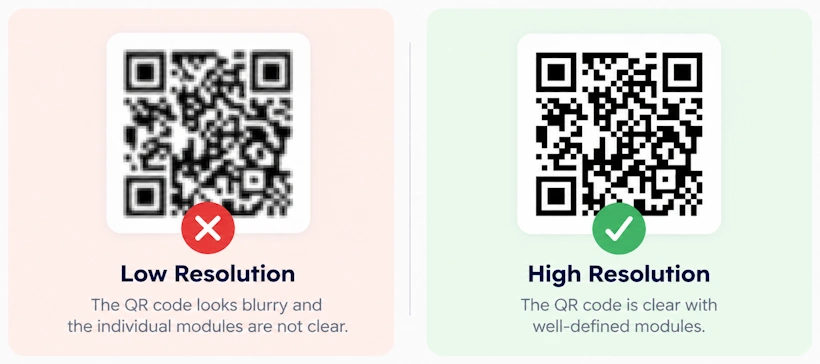
A low-resolution image is one of the most common causes of blurry QR codes.
For example, a QR code downloaded at a small size may look perfectly clear on a screen. However, if that same image is enlarged for a poster, banner, or sign, the individual modules can become pixelated or lose their sharp edges.
Always consider where the QR code will be used before downloading it. A QR code intended for a business card has very different image requirements from one intended for a large outdoor display.
Enlarging or stretching a QR code image
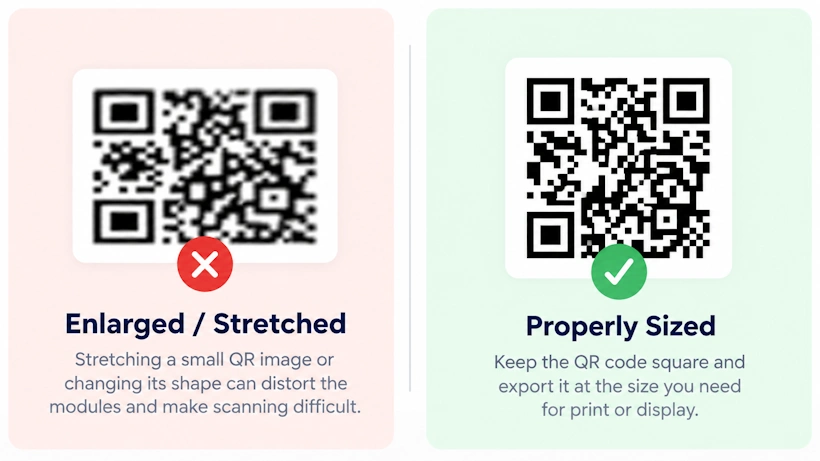
Resizing a raster image such as PNG beyond its original dimensions can affect its clarity.
PNG uses lossless compression, which helps preserve image quality when the file is saved. However, PNG is still a raster format. Enlarging a small PNG significantly can make the module edges appear pixelated or blurry.
For small and medium-sized applications, use a sufficiently high-resolution PNG. For substantial resizing or large-format printing, a vector format such as SVG is generally a better choice because it can scale without pixelation.
QRCodeChimp provides PNG and PDF downloads by default in multiple resolutions up to 4K. SVG can also be enabled for an account on request.
Image compression
The QR code may be clear when originally downloaded but lose quality later.
This can happen when the image is:
- Compressed during export from design software
- Saved in a heavily compressed image format
- Shared through an application that automatically reduces image quality
- Copied from a screenshot instead of using the original file
- Repeatedly resized or exported
Whenever possible, use the original QR code file rather than a screenshot or a compressed copy.
Printing problems
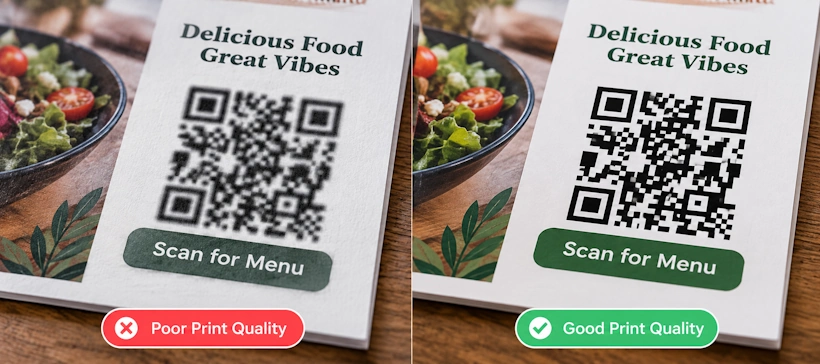
A QR code can look sharp on screen but become blurry after printing.
This may happen because of:
- Poor print quality
- Ink bleeding or smudging
- Incorrect printer settings
- Low-quality paper or printing material
- Printing the QR code too small for its level of detail
- Scaling a low-resolution image during printing
Instead of relying on a specific DPI value alone, make sure the individual modules remain clearly defined at the final printed size. QR code readability depends on factors such as module size, print resolution, and the scanning distance.
Before printing in bulk, always test the QR code at its actual intended size.
💡 Learn more: For more detailed guidance, see our guide to printing QR codes correctly.
For more detailed guidance, see our guide to printing QR codes correctly.
Environmental damage
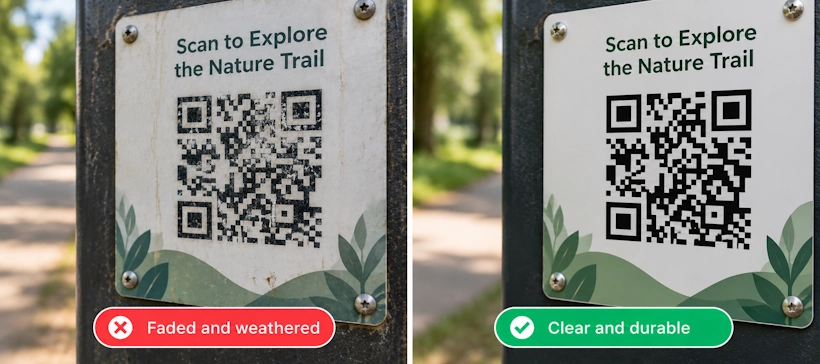
Environmental factors can also affect printed QR codes, particularly when they are used outdoors.
Exposure to sunlight, rain, moisture, dust, scratches, or extreme temperatures can cause a QR code to fade, smudge, or become distorted over time.
For outdoor installations, consider weather-resistant materials, lamination, or protective coatings. It is also a good practice to periodically test QR codes that will remain in use for long periods.
QR code design mistakes
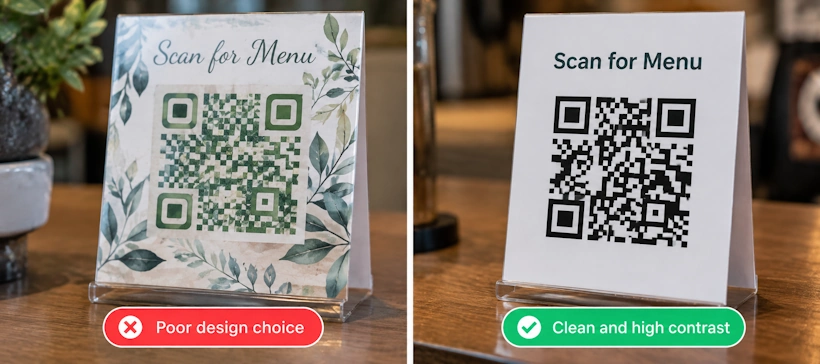
A QR code does not necessarily have to be black and white, but the foreground and background need sufficient contrast.
Very similar colors, busy backgrounds, excessive customization, or design elements that interfere with important areas of the QR code can make scanning more difficult.
The clear space surrounding the code, known as the quiet zone, is particularly important. The QR Code specification requires a clear margin of four modules around the QR symbol.
Avoid placing text, graphics, borders, or other design elements too close to the QR code.
💡 Read more: QR Code Size Guide: What’s the Ideal Size?
Uneven or textured surfaces
The surface on which a QR code is printed can also affect its appearance.
Fabric, highly curved packaging, textured surfaces, folds, and reflective materials may distort the QR pattern or make parts of it difficult for a camera to capture.
For example, a QR code printed or embroidered on fabric can become distorted when the material folds or stretches.
Whenever possible, place the QR code on a flat, stable surface and test it in the actual environment where people will scan it.
How to fix a blurry QR code
The best way to fix a blurry QR code depends on what caused the problem.
✅ Download the QR code again at a higher resolution
If you still have access to the QR code generator, downloading a fresh copy is usually better than trying to sharpen an already blurry image.
Choose a resolution suitable for the intended use and replace the low-quality image in your artwork.
If the QR code has been enlarged significantly, start again with a higher-resolution file rather than resizing the existing image.
✅ Use the right file format
Different formats work better for different applications.
PNG: Suitable for digital use and small to medium-sized print applications when downloaded at an appropriate resolution. Avoid significantly enlarging a small PNG.
PDF: Convenient when adding a QR code to printable documents or sharing artwork with a print provider. Check that the QR code remains sharp during export.
SVG: Better suited to applications that require substantial resizing, such as posters, signs, displays, or other large-format materials.
The important point is not simply to choose a “high-quality” format, but to use the format and resolution appropriate for the final size.
✅ Avoid unnecessary resizing and compression
Place the QR code into your design at or below its intended image dimensions whenever you are using a raster file.
Avoid repeatedly exporting, compressing, stretching, or taking screenshots of the QR code.
If you need to change its size substantially, download a larger version or use a vector format instead.
✅ Improve print quality
If the digital QR code is clear but the printed version is blurry, check the printing process.
Make sure:
- The original QR code file is sufficiently clear.
- Printer heads are clean and properly maintained.
- Ink or toner is not bleeding into neighboring modules.
- The QR code is not being automatically compressed or resized during printing.
- The final printed code is large enough for the intended scanning distance.
Print and test one sample before producing a large batch.
✅ Protect QR codes from damage
For QR codes exposed to outdoor or high-contact environments, use durable materials and appropriate protection.
Lamination, weather-resistant printing, protective coatings, and suitable placement can help prevent fading, scratching, and smudging.
Inspect long-term installations periodically and replace damaged QR codes when necessary.
✅ Check the QR code design
If image quality is not the issue, review the design itself.
Use sufficient contrast between the QR code and its background, keep the surrounding quiet zone clear, and avoid excessive design elements that make the individual modules difficult to distinguish.
If you customize your QR code, always test the final version on multiple devices before publishing or printing it.
✅ Choose an appropriate error correction level
QR codes include error correction that can help recover data when part of the code becomes dirty or damaged.
However, a higher error correction level is not automatically better for every QR code. Increasing error correction adds more redundant data and can increase the size or density of the QR symbol.
DENSO WAVE recommends choosing the level based on the operating environment and QR code size. Level M is commonly used, while higher levels such as Q or H can be useful when the code is more likely to become dirty or damaged.
Can you scan a blurry QR code?
Sometimes. Whether a blurry QR code can still be scanned depends on how much of its pattern remains distinguishable.
Try these steps:
- Adjust the distance: Move the phone slightly closer to or farther from the QR code and allow the camera to focus.
- Improve the lighting: Make sure the QR code is well lit without glare or strong reflections.
- Hold the device steady: Movement can make an already unclear QR code even harder for the camera to recognize.
- Try a different angle: This can help when glare, reflections, or a curved surface are affecting the scan.
- Use the original image: If you are scanning a QR code from an image or document, use the original file instead of a screenshot or compressed copy.
- Try another device: Camera quality and QR-reading capabilities vary between devices.
- Regenerate the QR code if possible: If you created the code and still have access to it, downloading a fresh high-resolution version is more reliable than trying to digitally sharpen a severely blurred image.
If information in the QR code has been lost because of heavy blur, compression, or physical damage, image editing cannot reliably recreate the missing QR pattern.
💡 Read more: How to Fix Your QR Code Scanning Problems
Best practices to prevent blurry QR codes
A few precautions during creation, design, and printing can prevent most clarity issues.
- Download the right resolution: Choose the image size based on where the QR code will be used.
- Avoid enlarging small raster images: Download a larger version instead.
- Use vector files for substantial scaling: Consider SVG when the QR code needs to be enlarged significantly.
- Maintain strong contrast: Make sure the QR pattern is clearly distinguishable from its background.
- Keep the quiet zone clear: Leave sufficient empty space around all four sides of the QR code.
- Avoid excessive compression: Use the original QR code file whenever possible.
- Choose suitable printing materials: Avoid surfaces that cause bleeding, distortion, reflections, or unevenness.
- Protect outdoor QR codes: Use materials suitable for weather and long-term exposure.
- Test the final version: Test the actual printed or published QR code, not just the original digital file.
- Test on multiple devices: This helps identify scanning problems before the QR code is distributed widely.
Conclusion
A blurry QR code is usually the result of low resolution, improper resizing, compression, printing problems, poor design, or physical damage.
The most reliable solution is to work from the original QR code and download it at the appropriate resolution or in a format suited to its final use. Avoid enlarging low-resolution images, preserve clear module edges and sufficient contrast, and always test the final printed or digital version before distribution.
With QRCodeChimp, you can create customizable QR codes and download them in high-quality formats for digital and print applications.
Frequently asked questions
Why are my printed QR codes blurry?
A QR code may look blurry after printing if the original image has low resolution, it has been enlarged too much, the printer causes ink or toner to bleed, or the code has been printed too small.
Start with a high-quality original QR code, avoid unnecessary resizing, check your printer settings, and test the QR code at its final printed size.
How can I make a QR code clearer?
If you created the QR code, download a fresh version at a higher resolution rather than trying to sharpen a blurry image.
For significant resizing, use a vector format such as SVG. Also make sure the QR code has sufficient contrast, a clear quiet zone, and clearly defined modules.
Can a blurry QR code be fixed?
If you have access to the original QR code, the best fix is usually to regenerate or download it again at the appropriate resolution.
If the only available copy is severely blurred or compressed, it may not be possible to restore the missing QR pattern reliably through image editing.
Do blurry QR codes still work?
Slightly blurry QR codes may still scan if enough of the module pattern remains readable. However, severe blur, pixelation, distortion, or damage can prevent scanning.
Try adjusting the distance, lighting, angle, and focus. If possible, use the original QR image or replace the blurry code with a clearer version.
Is PNG or SVG better for a QR code?
It depends on how the QR code will be used.
PNG works well for digital applications and small to medium-sized prints when downloaded at an appropriate resolution. SVG is generally better when the QR code must be resized substantially because it scales without raster pixelation.
Why does my QR code become blurry when I make it bigger?
If you enlarge a raster image such as a small PNG, the available pixels have to be stretched across a larger area. This can make the QR code’s module edges look pixelated or blurred.
Download the QR code at a higher resolution or use a vector format when substantial resizing is required.
You may also like
Airbnb QR Codes: Share Useful Information and Enhance Guest Experience
Discover practical ways Airbnb hosts can use QR codes to share WiFi, guides, directions, and property information while improving the guest experience.
QR Code Surveys: How to Get People to Scan and Respond
A QR code survey makes feedback easier to access, but the code alone doesn't generate responses. This guide explains how to create a QR code survey that earns the scan and keeps respondents moving to submission.
How Retail Stores Can Collect Customer Feedback Without Staff Prompts
Set up a feedback QR code for retail stores to collect customer feedback without relying on staff prompts. Learn where to place it and improve responses.
Can You Convert a UPC Barcode Into a GS1 QR Code?
Can you convert a UPC barcode to GS1 QR code? See how GTINs become GS1 Digital Link codes, and why UPC barcodes will not disappear immediately.
Most Popular
Contact Sales