Event planning can be stressful, especially when responses arrive through paper cards, messages, emails, and follow-up calls. Lost replies and scattered details make it difficult to estimate attendance and plan confidently.
An RSVP QR code simplifies the process by giving guests a quick way to respond from their phones. Depending on your event, you can collect structured responses through a customizable form, use Google Forms, send individual tickets with RSVP options, or receive confirmations through WhatsApp.
In this guide, you’ll learn four ways to create an RSVP QR code and choose the right method for your event.
- What is an RSVP QR code?
- Four ways to create an RSVP QR code
- RSVP QR code methods at a glance
- Use a Google Calendar QR Code as a reminder, not an RSVP method
- Creating a wedding RSVP QR code
- What to include in your RSVP form
- How to add an RSVP QR code to an invitation
- Best practices for using RSVP QR codes
- Simplify event planning with RSVP QR codes
- Frequently asked questions
What is an RSVP QR code?
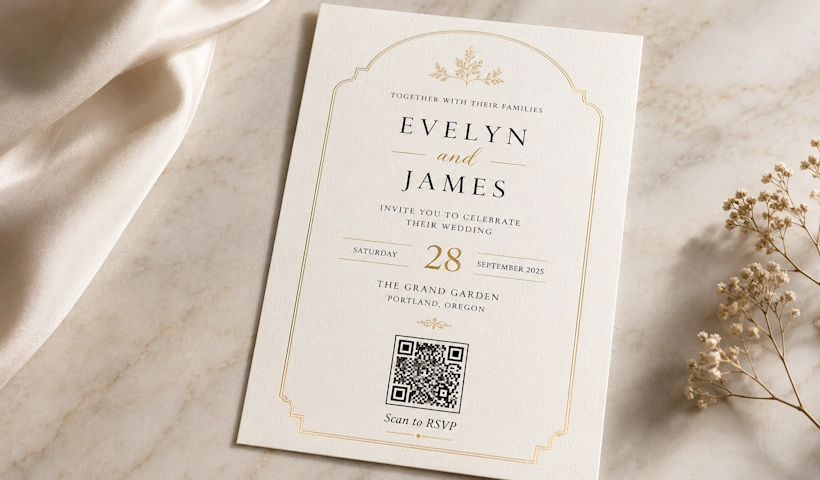
An RSVP QR code is a code placed on a printed or digital invitation that directs guests to a response form, RSVP page, or messaging channel.
After scanning it, guests can confirm whether they will attend and provide details such as their name, number of guests, meal preferences, or accessibility requirements.
The QR code provides access to the RSVP destination. How responses are collected, organized, and tracked depends on the method you choose.
Four ways to create an RSVP QR code
The right RSVP method depends on the type of event, the information you need, and how you want to manage responses.
1. Form QR Code: Collect customized guest details
A Form QR Code is ideal when you need structured RSVP responses and want to create a polished, branded guest experience.
You can customize the form page and QR code to complement your invitation or event identity while managing responses through QRCodeChimp. This creates a more cohesive experience from the invitation to the RSVP page than a basic third-party form.
It works well for weddings, conferences, corporate gatherings, workshops, private parties, and other events where you may need more than a simple yes or no.
How it helps
A customized RSVP form can collect information such as:
- Guest name
- Attendance status
- Number of guests
- Meal preferences
- Session or activity choices
- Accessibility requirements
- Contact information
- Additional comments
Submitted responses are collected in your QRCodeChimp dashboard, making it easier to review and export guest data.
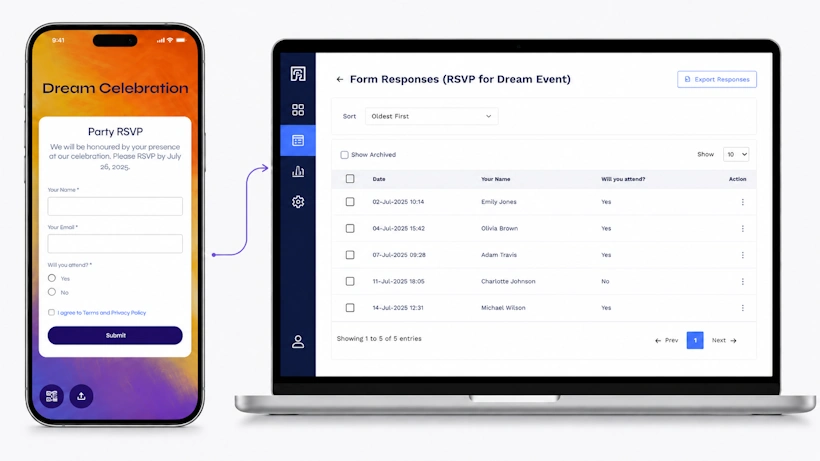
Monthly form response limits apply based on your QRCodeChimp plan. Before sending invitations, check that your plan supports the number of responses you expect to receive.
Steps to create an RSVP Form QR Code
Step 1: Go to QRCodeChimp’s Form QR Code Generator.
Step 2: Choose a page template and add your event information.
Step 3: Create your RSVP form. Add only the fields you need for planning the event.
Step 4: Customize the form page and QR code to complement your invitation or event branding.
Step 5: Save your QR code and test the complete form-submission process.
Step 6: Download the QR code and place it on your invitation or RSVP card.
When guests scan the code, they can complete the form on their phones. Their responses are stored in the Form Responses section of your QRCodeChimp account, subject to your plan’s monthly response limit.
Best for: Events that require customized questions, a branded RSVP experience, and centralized response management.
💡Learn more: How to create a form QR code
2. Google Forms QR Code: Store structured responses in Google Forms
A Google Forms QR Code is a practical option when you already use Google Forms and prefer a simple, familiar workflow.
It offers less design customization than a QRCodeChimp form, but it works well for straightforward RSVP collection and spreadsheet-based response management.
It is suitable for workshops, school events, community events, conferences, and smaller gatherings that require a basic form.
How it helps
Google Forms lets you create an RSVP form and organize submissions in Google Forms or a connected Google Sheet.
Steps to create a Google Forms RSVP QR code
Step 1: Create your RSVP form in Google Forms.
Step 2: Add the questions you need, such as attendance, guest count, meal preferences, or comments.
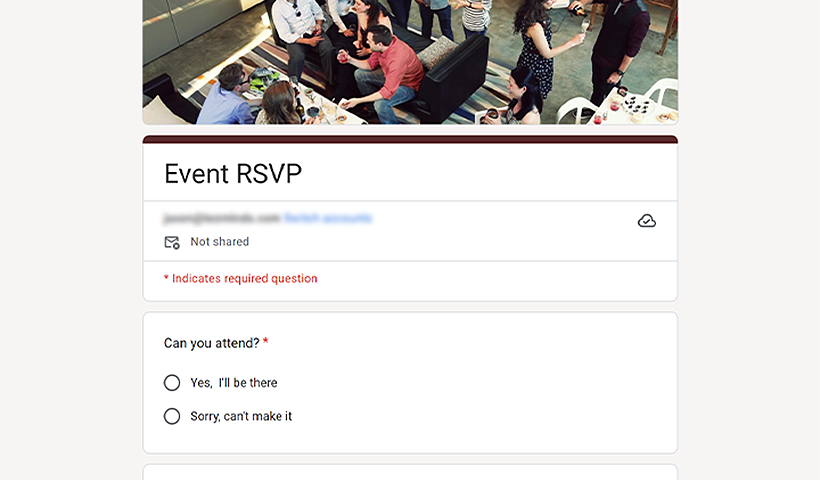
Step 3: Copy the link intended for respondents.
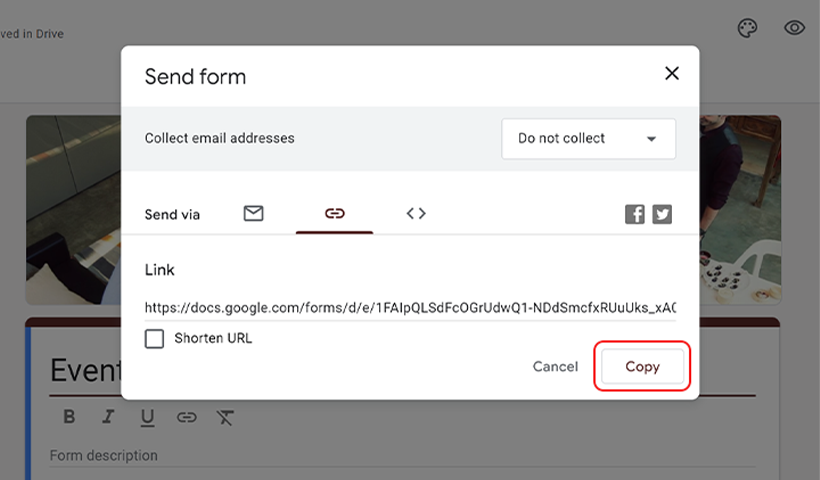
Step 4: Go to QRCodeChimp’s Google Forms QR Code Generator.
Step 5: Paste the Google Form link into the designated field.
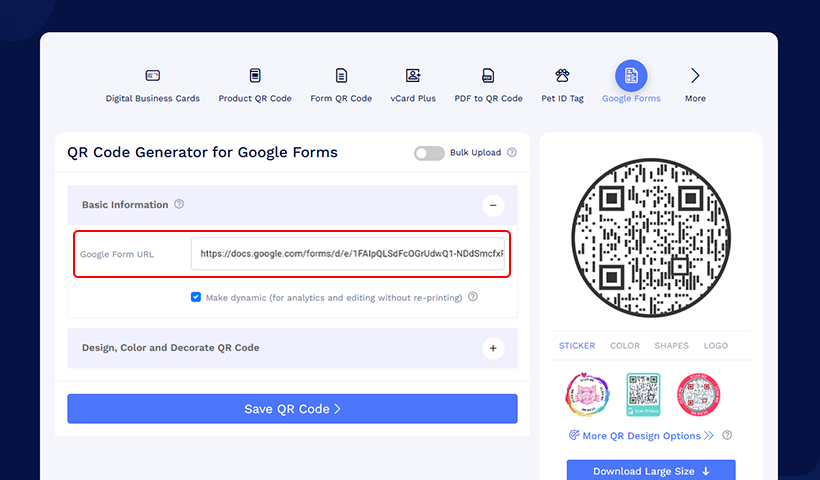
Step 6: Customize the QR code to complement your invitation design.
Step 7: Save, test, and download the QR code.
Step 8: Add it to your printed invitation, RSVP insert, or digital invitation.
When guests scan the code, the Google Form opens on their phones. Their submissions are managed through Google Forms rather than the QRCodeChimp Form Responses dashboard.
Best for: Organizers already using Google Forms or Google Sheets for guest management.
💡Learn more: How to Make a QR Code for Google Forms
3. Event Ticket RSVP: Manage named guests and individual tickets
An Event Ticket QR Code is useful when you want to invite specific guests, maintain individual attendee records, or issue a separate ticket to each person.
Choose this method when you already know who the invitees are and want an individual attendee record or ticket for each person.
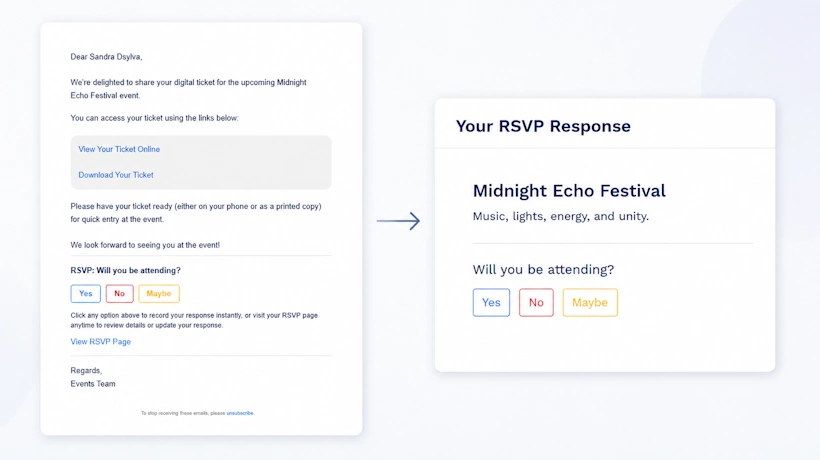
QRCodeChimp lets you enable RSVP while sharing bulk event tickets through email. Recipients can respond using the RSVP buttons or the RSVP page included in the email.
How it helps
With the Event Ticket workflow, you can:
- Create individual tickets for named attendees
- Send tickets privately through email
- Collect and update RSVP responses
- View responses in the ticket report
- Monitor responses through the event attendance summary
- Use the same tickets for entry validation when needed
Ticket locking and RSVP can be configured separately. If you only need RSVP collection, you can keep locking disabled so scanning the ticket does not lock it.
If you also need controlled entry, you can use ticket validation and attendance tracking as part of the same workflow.
Steps to enable RSVP for Event Tickets
Step 1: Login to your QRCodeChimp account and go to bulk QR codes.
Step 2: Create your Event Ticket bulk batch if not created.
Step 2: Locate your ticket batch and select Share Ticket via Email from the bulk batch.
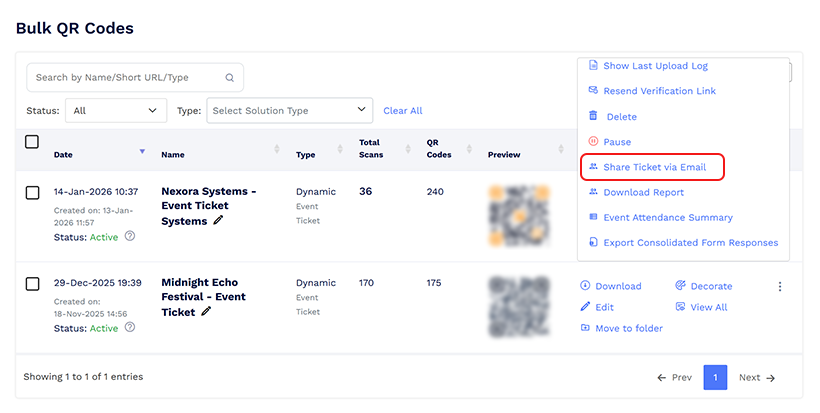
Step 3: Customize the ticket PDF colors if needed, and then select Save & Continue.
Step 4: Choose the email field that should receive the ticket.
Step 5: Enable the RSVP option before sending the tickets.
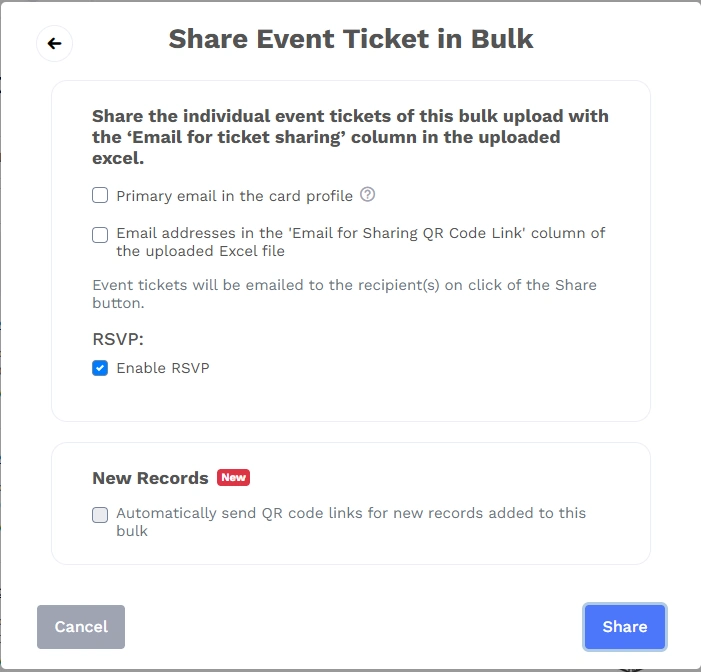
Recipients receive an email with RSVP buttons and a link to view the RSVP page. They can submit or update their attendance response through the email.
The RSVP action happens through the email buttons or RSVP page. Scanning the QR code on the ticket is not required to submit the RSVP.
Best for: Invite-only events, member gatherings, corporate events, internal events, or occasions where each attendee needs an individual record or ticket.
4. WhatsApp RSVP: Collect quick and personal confirmations
A WhatsApp QR Code works well for small, informal events where you prefer direct communication with guests.
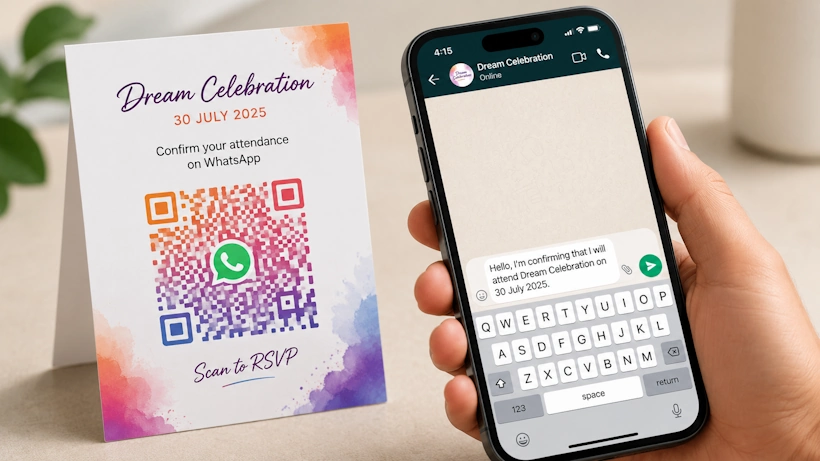
It may be suitable for family gatherings, birthday parties, community meetups, or other events with a manageable guest list.
How it helps
Scanning the QR code opens a WhatsApp chat with your number and a pre-filled RSVP message. The guest can review the message and press Send to confirm.
Steps to create a WhatsApp RSVP QR code
Step 1: Go to QRCodeChimp’s WhatsApp QR Code Generator.
Step 2: Enter your WhatsApp number.
Step 3: Add a pre-filled RSVP message, such as:
Hello, I’m confirming that I will attend [event name] on [date].
You may also ask guests to add their name or number of attendees before sending the message.
Step 4: Customize the QR code to suit your invitation.
Step 5: Save and test the QR code.
Step 6: Download it and add it to your invitations or digital messages.
WhatsApp provides a quick and personal response channel, but replies must generally be reviewed and organized manually. Choose a form-based method when you need structured reporting or have a large guest list.
Best for: Small, informal events where manual response management is practical.
💡Learn more: How to create a WhatsApp QR code
RSVP QR code methods at a glance
| Method | Best for | Main advantage | How responses are managed |
|---|---|---|---|
| Form QR Code | Branded events, weddings, conferences, workshops, and open invitations | Customizable RSVP experience | Collected in the QRCodeChimp Form Responses dashboard |
| Google Forms QR Code | Simple Google-based workflows | Easy setup and Google Sheets integration | Managed through Google Forms or Google Sheets |
| Event Ticket RSVP | Named guests, invite-only events, and events requiring individual tickets | RSVP, attendee records, and optional entry validation | Collected in the ticket report and attendance summary |
| WhatsApp QR Code | Informal events and smaller guest lists | Quick, personal responses | Reviewed and organized manually in WhatsApp |
Use a Google Calendar QR Code as a reminder, not an RSVP method
A Google Calendar QR Code can help guests save the event date, time, location, and other details to their calendars. However, adding an event to a calendar does not tell the organizer whether that guest plans to attend.
Use it as a helpful addition after the RSVP process rather than as a replacement for an RSVP form or response page.
For example, you can include an Add to Calendar link on the confirmation page guests see after submitting their RSVP.
💡Learn more: How to create a Google Calendar QR code
Creating a wedding RSVP QR code
Weddings are one of the most common uses for RSVP QR codes, and the process follows the same methods described above with a few wedding-specific considerations.
Choose questions that help you plan the celebration
A wedding RSVP form may need to collect details such as:
- Whether a plus-one will attend, if the invitation allows one
- Attendance for individual events, such as the ceremony, reception, or welcome dinner
- Meal choices or dietary restrictions
- An optional song request or message
The general RSVP fields covered later in this guide, such as guest name, contact information, and accessibility requirements, also apply to weddings.
A Form QR Code works well because you can customize the form to match your wedding invitation and manage every response from one dashboard.
Already have a wedding website or RSVP page?
If your wedding website already includes an RSVP form, you do not need to create another response system. You can use a URL QR Code to send guests directly to the existing RSVP page.
Step 1: Copy the direct link to your wedding website’s RSVP page, not just the homepage.
Step 2: Go to Dynamic URL Solution on QRCodeChimp and paste the RSVP page link.
Step 3: Customize the QR code to match your invitation suite.
Step 4: Test the code, then add it to your RSVP insert or the back of the invitation.
Because the QR code is dynamic, you can update its destination later, such as when you move the RSVP page, without reprinting your invitations.
Match the code to your invitation suite
Wedding invitations are often printed on textured, patterned, or dark paper. Place the QR code on an uncluttered, high-contrast area, away from heavy textures, patterns, folds, and decorative elements.
Add a short instruction such as “Scan to RSVP by [date],” and always test a printed proof before the full print run.
What to include in your RSVP form
Your RSVP form should collect enough information to help you plan the event without making the response process unnecessarily long.
Consider including:
✅ Attendance status
Allow guests to select Yes, No, or Maybe, depending on how you intend to manage uncertain responses.
✅ Guest name
Ask for the name associated with the invitation so you can match the response to your guest list.
✅ Number of attendees
For invitations that allow additional guests, ask how many people will attend.
✅ Meal or dietary preferences
Collect this information when food will be served and the venue or caterer needs advance notice.
✅ Session or activity selection
For conferences, workshops, school events, or multi-session programs, let attendees select the sessions they plan to join.
✅ Accessibility requirements
Give guests an optional field to share accessibility or support requirements.
✅ RSVP deadline
Display the final response date clearly on the invitation and within the form.
✅ Contact information
Collect an email address or phone number only when you need it for event updates, confirmations, or follow-ups.
Avoid asking for information that is not necessary for organizing or communicating about the event.
How to add an RSVP QR code to an invitation
An invitation sets the tone for your event. Adding an RSVP QR code should make responding easier without compromising the invitation’s design or readability.
✅ Choose a thoughtful placement
Where you place the QR code matters. Common options include:
- A separate RSVP insert: A dedicated RSVP card or insert keeps the main invitation clean and gives you enough room for instructions.
- The back of the invitation: This keeps the front focused on the main event details.
- A clearly separated section: On digital invitations or event flyers, place the QR code near the RSVP deadline and response instructions.
Keep the code away from folds, edges, textured areas, or decorative elements that may interfere with scanning.
✅ Use an appropriate printed size
The QR code must be large and clear enough to scan comfortably. Around 1 × 1 inch can be a practical starting point for many printed invitations, but the required size depends on the scan distance, material, printing quality, and QR code complexity.
Leave sufficient clear space around the QR code and test the final printed version rather than relying only on an on-screen preview.
✅ Add clear instructions
Never assume every guest will know what the QR code does. Add a direct call to action, such as:
- Scan to RSVP
- Scan to RSVP by [date]
- Scan to confirm your attendance
- Scan to submit your meal preference
“Scan to RSVP” is usually clearer than a generic instruction such as “Scan here.”
✅ Offer an alternative response option
Some guests may be unable or unwilling to scan a QR code. Include an alternative method such as:
- A short RSVP URL
- An email address
- A phone number
- A WhatsApp number
This ensures every guest has a practical way to respond.
Best practices for using RSVP QR codes
✅ Customize the design carefully
Your QR code can complement the visual identity of your event.
You can:
- Use colors that match the invitation
- Add an event or organization logo
- Choose suitable QR shapes and patterns
- Add a QR code frame with an RSVP instruction
Maintain sufficient contrast between the QR code and its background. A visually attractive code is useful only when it remains easy to scan.
✅ Test before printing or sharing
Before distributing your invitation:
- Scan the QR code with multiple phones
- Confirm that it opens the correct RSVP destination
- Complete and submit the form yourself
- Check that the response appears in the expected dashboard, report, spreadsheet, or chat
- Test the final printed invitation under different lighting conditions
- Ask another person to complete the full response process
Testing the complete journey helps identify problems that may not be visible in the QR code preview.
✅ Keep the response process mobile-friendly
Most guests will RSVP from their phones. Keep forms short, use clear field labels, and avoid instructions that require guests to switch repeatedly between apps or pages.
✅ Set a clear deadline
Place the RSVP deadline close to the QR code and repeat it on the response page. A visible deadline reduces follow-up work and helps guests understand when they need to respond.
✅ Check your response limit
If you use a QRCodeChimp Form QR Code, confirm that your plan’s monthly form response limit can accommodate your expected guest count.
Account for invited guests who may submit more than once to update or correct their response.
✅ Protect guest information
Guests trust you with their information when they RSVP.
To handle it responsibly:
- Collect only the information needed for the event
- Explain how the information will be used
- Add relevant privacy information or terms where required
- Restrict access to response data
- Use a trusted platform with appropriate security and privacy measures
- Delete or retain information according to your event’s requirements and applicable regulations
Simplify event planning with RSVP QR codes
Managing responses does not have to mean juggling paper cards, emails, messages, and manual lists. An RSVP QR code gives guests a direct route to the response method you choose.
Use a Form QR Code when you need customized questions, a branded guest experience, and centralized response management. Use Google Forms when your workflow already depends on Google’s tools. Choose Event Ticket RSVP when you are inviting named attendees or may also need individual tickets, and choose WhatsApp for small events where manual replies are manageable.
The right setup helps you spend less time chasing confirmations and more time preparing for the event.
Create a customizable RSVP form and manage guest responses from one dashboard with QRCodeChimp.
Frequently asked questions
Can I create an RSVP QR code for free?
You can create an RSVP form with Google Forms at no cost and generate a QR code that links to it. QRCodeChimp also supports forms, but monthly response limits and available features depend on your current plan. Check the pricing page before choosing a workflow for a larger event.
Is creating an RSVP QR code complicated for beginners?
No. First, choose where guests should submit their responses. You can create a QRCodeChimp form, link a Google Form, enable RSVP for bulk Event Tickets, or open a WhatsApp conversation. Then generate, customize, test, and add the QR code to your invitation.
Can I personalize my RSVP QR code to match my event theme?
Yes. QRCodeChimp provides customization options such as colors, shapes, logos, images, patterns, and frames. You can also customize your QRCodeChimp form page to create a more consistent experience from the invitation to the RSVP form. Keep the design clear, use sufficient contrast, and test the final version before printing.
How can QR codes help me manage guest responses more effectively?
That depends on the RSVP method. Form QR Code submissions are collected in the QRCodeChimp dashboard, Google Forms responses are managed through Google’s tools, and Event Ticket responses appear in ticket reports and attendance summaries. WhatsApp responses generally require manual organization.
Can I use a QR code with my wedding website’s RSVP page?
Yes. Create a dynamic URL QR Code that points directly to your wedding website’s RSVP page and add it to your invitation or RSVP insert. Guests can scan the code and respond on the website, and you can update the destination later without reprinting.
Can I enable RSVP for Event Tickets without using ticket locking?
Yes. RSVP and ticket locking can be configured separately. You can enable RSVP while keeping locking disabled when you want to collect attendance responses without using scan-based ticket validation.
When bulk tickets are shared through email, recipients submit their RSVP through the email buttons or RSVP page.
Does scanning an Event Ticket QR Code submit the guest’s RSVP?
No. For bulk Event Tickets shared through email, guests respond using the RSVP buttons or the View RSVP Page link included in the email. The QR code on the ticket can be used separately for ticket validation when that workflow is enabled.
Can a Google Calendar QR Code collect RSVPs?
No. A Google Calendar QR Code helps guests view or save the event in their calendars, but it does not send an attendance response to the organizer. Use it alongside an actual RSVP form or response method.
What if my guests are unfamiliar with scanning QR codes?
Add clear instructions such as “Scan to RSVP by [date]” near the QR code. You should also provide an alternative response option, such as a short URL, email address, phone number, or WhatsApp number.
Are RSVP QR codes safe for handling guest information?
The QR code only provides access to the response destination. Data security and privacy depend on the platform, form settings, account access, and how the organizer handles the information.
Use a trusted platform, collect only necessary details, restrict access to responses, and clearly communicate how guest information will be used.
Can I change the RSVP destination after printing my invitations?
Yes, if you use a dynamic QR code. QRCodeChimp’s dynamic QR codes let you update the destination without reprinting, and QRCodeChimp-hosted forms can be edited after the QR code is saved.
Always test the QR code again after making significant changes.
Are there response limits for QRCodeChimp RSVP forms?
Yes. QRCodeChimp applies a monthly form response limit based on your plan. Check your expected number of responses and current plan limit before distributing your invitations.
You may also like
How to Group Cards in QRCodeChimp Entra ID Setup
Learn to organize digital business cards effectively using QRCodeChimp Entra ID grouping. Simplify card management by group, filter, or all-in-one.
Google Review Cards: Collect Reviews by Scan or Tap
Google Review cards use a QR code, NFC tap, or both to send customers to your review page. Learn how they work, how to create one, and where to use them.
Top 5 Best QR Code Survey Tools to Collect Feedback and First-Party Data
Let’s look at the top 5 QR code survey platforms that let you create a survey form, generate a QR code for it, and manage responses, all within a single platform.
QR Code Surveys: How to Get People to Scan and Respond
A QR code survey makes feedback easier to access, but the code alone doesn't generate responses. This guide explains how to create a QR code survey that earns the scan and keeps respondents moving to submission.
Most Popular
Contact Sales