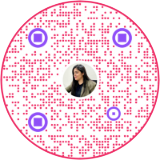
A written address is frozen text. Every person who receives it has to read it, type it into a map app, and hope they choose the right result. It can be saved in a message or note, but it still has to be copied, searched, or re-entered before it becomes useful for navigation. An address QR code changes what an address can do: it becomes something you share in one scan, something recipients can open and save for later, and something you reuse across different materials without recreating it every time.
This article is organized around those three jobs because that is where an address QR code actually earns its place. If you want to create one, you can use QRCodeChimp’s Google Maps QR Code solution to turn an address or map link into a scannable QR code.
What an address QR code changes
An address QR code encodes a map link to a specific place, so scanning it opens that location on the viewer’s phone with directions ready. That mechanic is simple. The value is in what becomes possible once the address is a code rather than plain text: it can travel across formats, be opened quickly, and be reused across materials.
Those three abilities, sharing, saving, and reusing, are what turn a static address into a working tool.
Share: one address, ready for any surface
Text addresses are tied to their surface. The address on a flyer does nothing for someone reading your email, and the one in a printed invite still has to be typed into a map app. Each surface asks the reader to start over manually.
A QR code gives the address the same action everywhere. Print it on a card, add it to a poster, include it in a message, place it on a brochure, or use it on a package, and the experience stays the same: scan once and open the location.
For the recipient, the long-standing friction of reading and retyping an address disappears. For the sender, the same address can be distributed across many touchpoints without rewriting or reformatting it each time.
💡 Tip: Place the QR code right next to the printed address rather than in a separate corner of the page. People instinctively look at the address when they want directions, so the code gets noticed and scanned in the same glance.
Save: let people keep your location for later
This is where an address QR code stands apart from a plain written address. When someone scans your code, their map app opens the actual place or location. From there, they may be able to save, star, or revisit it later depending on the app they use.
That matters most for locations people may need again: a clinic, office, studio, hotel, event venue, property site, school, or local business. With a typed address, returning later often means finding the original message or searching again. With a scanned address, the location is easier to access again from the user’s map history or saved places.
You are not just giving directions for one moment. You are making the address easier to keep and revisit.
Reuse: one code across materials and over time
A written address has to be placed again on every new material. If the address changes, every printed copy can become outdated.
An address QR code makes reuse easier. The same code can appear on flyers, invitations, brochures, packaging, documents, posters, and digital messages. If you use a dynamic QR code, you can update the destination behind the code without changing the printed QR code itself.
This is helpful when an address changes, a unit number is updated, an entrance is corrected, or a map pin needs to be improved. Instead of recreating or reprinting every material, you can update the destination from your dashboard.
Dynamic QR codes can also provide scan analytics, helping you understand which placements people are actually using. To understand editing and tracking options in more detail, read QRCodeChimp’s guide on static vs dynamic QR codes.
💡 Tip: If your address might ever change, a dynamic code is worth choosing from the start, since a static code can only be replaced by reprinting everything that carries it.
The address details that make or break all three
Sharing, saving, and reusing all depend on the QR code opening the right place. Address details are surprisingly easy to get wrong, so check these carefully before publishing:
- Unit, suite, and floor numbers are often missed or entered inconsistently. Confirm the exact destination instead of trusting the typed address alone.
- A recognizable place listing is better than an unlabeled pin when available. If the QR code opens a listing with your name and details, users are more likely to know they are heading to the right place.
- Map apps may behave differently. The same link can open slightly differently across devices, so test the QR code on both iPhone and Android before printing.
- Final-arrival details still matter. If users need a specific gate, parking area, reception desk, floor, or entrance, mention that information near the QR code.
Getting these details right is what makes a saved location useful later and a reused code reliable across different materials.
How to create an address QR code
You can turn an address into a shareable, saveable, reusable code in a few simple steps:
- Open Google Maps, search the address, and adjust the pin precisely.
- Choose Share, then Copy Link.
- Paste the link into QRCodeChimp’s Google Maps QR Code solution.
- Select Make dynamic if you want to edit the destination later or track scans.
- Customize the design with your brand elements, and choose a relevant CTA sticker that helps users understand what the QR code does.
- Save the QR code and test it on both iPhone and Android before printing or sharing it widely.
Conclusion
An address only helps people if they can actually use it. As plain text, it still asks them to read, search, copy, or type. Turning it into an address QR code gives it three abilities it never had: it can be shared in a single scan across different surfaces, opened and saved more easily by the recipient, and reused across materials without being recreated.
Choose an accurate destination, use a dynamic QR code when the address may need updates, test it across devices, and include any final-arrival details users may need. Done well, a once-static address becomes something genuinely easy to share, save, and reuse.
Create your address QR code with QRCodeChimp and make your address easier to access with one scan.
You may also like
GS1 Application Identifiers Explained: GTIN, Batch, Serial, Expiry, and More
This guide explains the most important GS1 Application Identifiers used for product identification, traceability, retail, and packaging.
Steps to Integrate Microsoft Entra ID (Azure AD) with QRCodeChimp
Learn how to connect Microsoft Entra ID with QRCodeChimp to automate digital business card creation, improve security, and simplify onboarding.
Blurry QR Code? Why It Happens and How to Fix It
Blurry QR code? Learn what causes poor QR clarity and how to fix low resolution, resizing, compression, printing, and design issues for reliable scanning.
Bulk QR Codes for Business: Use Cases and Benefits
Discover how bulk QR codes for business can streamline product packaging, employee cards, events, multi-location campaigns, inventory, and more
Most Popular
Contact Sales