Most brands can tell you exactly what their last paid ad or email campaign delivered. Click-through rates, cost per lead, conversion data, all of it available within minutes on a dashboard.
Ask them what their product packaging delivered last quarter? Silence.
That is not a small gap. 72% of American consumers say a product’s packaging significantly influences their purchasing decision.
Packaging earns attention at the highest-intent moment in the entire customer journey. It is the last thing a shopper sees before deciding to buy, and the first thing they interact with after purchase.
Yet for most brands, its ROI remains completely invisible.
You can solve this problem by tracking product packaging ROI with QR codes. And as the industry moves toward GS1 Sunrise 2027, there’s never been a better time to include QR codes on your product packaging.
Key Takeaways:
- Packaging is a marketing channel. Start measuring it like one.
- 79% of shoppers prefer products with a scannable QR code.
- GS1 Sunrise 2027 is making QR codes on packaging the global standard.
- Dynamic QR codes let you update destinations without reprinting packaging.
- Scans alone are not ROI. Track what consumers do after they scan.
- Packaging is one of your most powerful marketing assets
- The measurement gap you cannot afford to keep ignoring
- What you lose when packaging has no measurable path
- How to set up packaging QR codes that actually improve ROI?
- Why dynamic QR codes are non-negotiable for packaging
- Where QRCodeChimp fits into your packaging and GS1 strategy
- Final thoughts: Packaging should not be a blind spot in your marketing data
Packaging is one of your most powerful marketing assets
Think about the last digital campaign you ran. You had a goal, a target audience, a landing page, and a real-time dashboard telling you what worked and what did not.
Now think about your packaging. You had a design brief, a print run, a distribution plan, and then nothing. The product left the warehouse, and the conversation with your customer went dark.
That is a missed opportunity on a significant scale.
Packaging is no longer just a container. It is a data source and a storytelling tool.
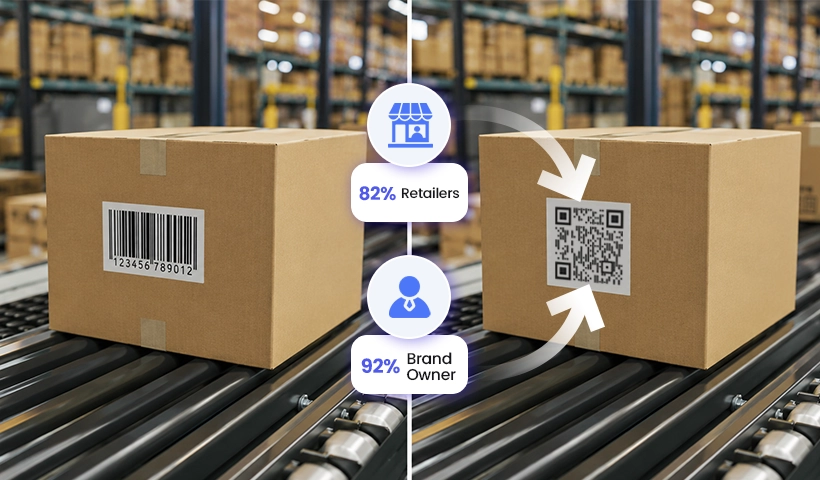
The numbers back this up. 82% of retailers and 92% of brand owners supported transitioning from the UPC barcode to data-rich 2D barcodes like QR codes.
This is not a gradual warm-up. The industry is accelerating toward connected packaging because it delivers results, and because brands can finally prove it.
The measurement gap you cannot afford to keep ignoring
Unmeasurable product packaging has a critical blind spot: how consumers interact with the packaging itself.
Your packaging generates awareness and consideration at every touchpoint. You just cannot prove it when budget season arrives.
Without a measurable path, brands cannot reliably answer questions like:
- Which SKUs generate the most curiosity or confusion among shoppers?
- What packaging message actually moves people to act?
- Which regions or retail channels show stronger consumer engagement?
- Are consumers looking for ingredients, instructions, authenticity verification, or offers?
- Does packaging drive reviews, reorders, loyalty signups, or support requests?
Sales data alone cannot fill this gap. A product can sell well because of price, placement, or brand familiarity. None of that tells you what the consumer wanted to know before buying, what confused them during use, or what action they were ready to take after.
Because QR code interactions can be tracked, brands can see exactly how many scans occur, which products generate the most engagement, and how those scans correlate with revenue. That shift from guessing to knowing is exactly where product packaging ROI with QR codes becomes genuinely transformative.
What you lose when packaging has no measurable path
When packaging has no digital path built in, brands lose visibility across five areas that directly affect growth.
Product-level engagement data
Sales numbers show what people bought. They do not show what people wanted to understand after buying. Product packaging QR codes reveal which SKUs generate the most digital engagement, informing better merchandising and reorder decisions.
A high-selling SKU may not be your most engaged one. A lower-volume product may reveal surprising curiosity if consumers are actively scanning for certifications, recipes, or instructions.
Location and market-level engagement
Packaging engagement can vary significantly by region, retailer, or distribution zone.
Without scan data, you are making budget and distribution decisions based on sales volume alone, missing the nuance of where consumers are most engaged or where they need more reassurance before committing to a purchase.
Message and content performance
Your packaging carries multiple messages: benefit claims, sustainability credentials, trust signals, offers, and instructions. But which message actually drives action?
QR engagement tells you whether consumers respond more to ingredient transparency, loyalty rewards, usage tips, or reorder prompts. That insight directly shapes your next packaging iteration, and over time, your brand positioning.
Post-purchase behavior
Without a measurable path, post-purchase engagement becomes a guessing game. Brands lose visibility into whether packaging drove a review, a reorder, a loyalty signup, or a support visit.
Those actions may happen through disconnected channels, or they may not happen at all. Either way, you cannot see them, measure them, or improve them. That is a significant blind spot at a moment when the customer is already holding your product and ready to act.
First-party data and direct relationships
With the right consent-based experience, packaging can help brands collect feedback, grow loyalty memberships, and build direct customer relationships that do not depend on third-party platforms or paid media.
Without a QR touchpoint, the customer interaction typically ends at the checkout, even when the consumer is ready to go further.
How to set up packaging QR codes that actually improve ROI?
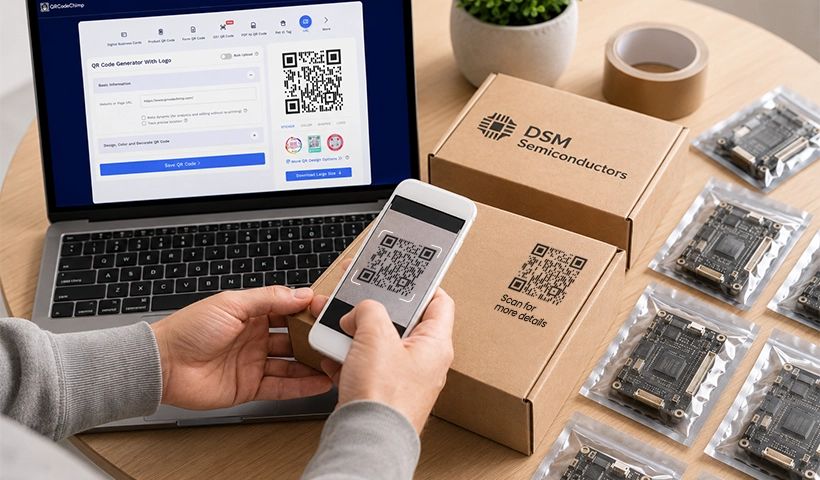
Adding a QR code to packaging is the easy part. Setting it up to generate useful, actionable data takes more intention. Here is how to approach it properly.
Start with the question you want answered
Before creating any QR code, decide what you want to learn. Which SKU gets the most scans? Does packaging drive loyalty signups, reorders, or warranty registrations? Which region engages most? The clearer the question, the easier it becomes to design the right experience and measure the right outcome.
Align with GS1 Digital Link standards from the start
If you are preparing for Sunrise 2027, this step is not optional. For brands, GS1 recommends adding 2D barcodes to existing packaging and ensuring any existing QR codes are updated with GS1 Digital Link standards and include your Global Trade Item Number (GTIN).
Building GS1 compliance into your QR strategy now means you are not scrambling to retrofit packaging later.
Use separate QR codes for meaningful variables
If every product uses the same QR code, your data gets blended into a number that tells you very little. Use different codes for SKUs, product lines, markets, packaging versions, campaign periods, or retail locations. This is what turns aggregate scan totals into product packaging ROI with QR codes that is genuinely actionable.
Match the CTA to what the consumer actually wants
Vague prompts like “Scan me” do not work. The call-to-action should tell consumers exactly what they will get. Specific CTAs improve both scan rates and data quality. For example:
- Get usage tips
- Verify authenticity
- View ingredients and sourcing
- Register your warranty
- Claim your offer
- Reorder this product
- Join our rewards program
Send consumers to a focused, mobile-first destination
Packaging scans happen on mobile, often while shopping, cooking, unboxing, or assembling. The destination should match the promise on the package and load instantly. Send consumers to product-specific pages, offer forms, video guides, support resources, or registration flows. Never send everyone to your homepage.
Measure beyond the scan
Track scans, but do not stop there. Measure landing page engagement, form submissions, registrations, offer claims, reviews, reorders, and support interactions. A QR code delivers real product packaging ROI with QR codes only when it is tied to a clear consumer action and a measurable business outcome.
Why dynamic QR codes are non-negotiable for packaging
Static QR codes offer limited traceability, making it difficult to measure packaging ROI accurately.
Dynamic QR codes are trackable and offer detailed analytics, making them essential for packaging.
And with dynamic QR codes, you can update the content linked to the QR code without reprinting the QR code itself.
Product packaging is expensive to change once it is printed, shipped, and distributed. This makes static QR codes less effective for product packaging.
Dynamic QR codes give print marketers the control that packaging demands. The printed code remains unchanged, but the destination can be updated at any time.
Where QRCodeChimp fits into your packaging and GS1 strategy
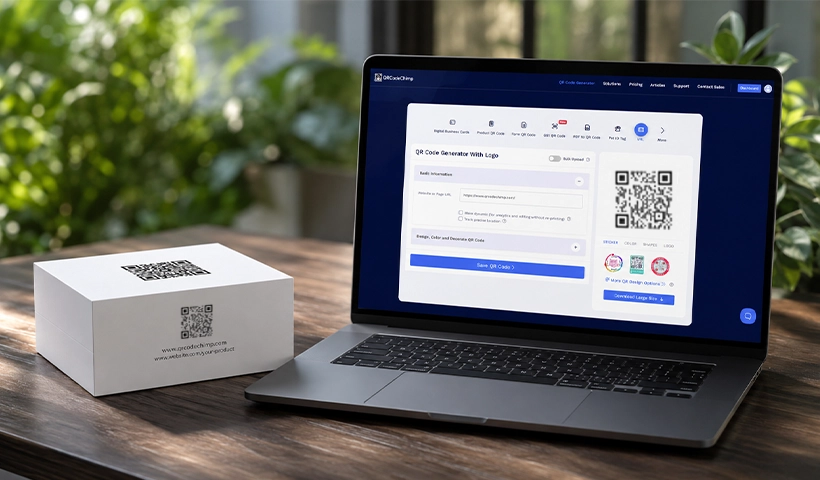
QRCodeChimp helps brand marketers, product managers, packaging designers, and agency teams turn product packaging into a measurable engagement channel. Critically, QRCodeChimp supports GS1 QR codes and GS1 Digital Link, so your packaging strategy is built on the same standards the entire retail industry is moving toward.
- GS1 compliance and Sunrise 2027 readiness: Create GS1 Digital Link-compliant QR codes that work at the point of sale and on consumer smartphones simultaneously. One code serves checkout, consumer engagement, compliance, and analytics.
- Dynamic QR codes that stay editable after print: Update destinations anytime without reprinting. Whether an offer expires or a product page changes, the printed code stays the same, and the experience stays current.
- Precise location intelligence: GPS and IP-based location data exports give teams pinpoint accuracy on where scans are happening, telling you exactly which regions, retailers, or markets your packaging is engaging.
- Real-time analytics and reporting: Track scans, device type, time trends, and location from one dashboard. Connect to GA4, receive daily email summaries, and export scan data anytime.
- Instant lead alerts via SMS and API: When a prospect submits a form on your QR landing page, QRCodeChimp fires an SMS alert or triggers an API call to your CRM instantly. No lag, no missed intent.
- Bulk QR code generation via CSV upload: Upload a CSV or Excel file and generate thousands of QR codes in a single step. Ideal for large packaging rollouts, multi-SKU launches, and seasonal campaigns.
- Branded QR codes built for packaging: Design QR codes with custom shapes, colors, and logos. The Image to QR feature lets you use your brand logo as the QR background, producing a scannable, on-brand code that gets noticed on pack.
For teams preparing for Sunrise 2027, QRCodeChimp brings GS1 compliance, consumer engagement, and performance measurement into one practical workflow.
Final thoughts: Packaging should not be a blind spot in your marketing data
Your packaging already earns attention. It appears at the point of decision, travels home with the customer, and creates repeated engagement opportunities that most brands never fully capture.
Every untracked scan is a question your brand could not answer. Every missing data point is a decision you had to make without evidence. And with Sunrise 2027 approaching, every packaging cycle you run without a GS1-compliant QR strategy is a missed chance to build the infrastructure your brand will need anyway.
Product packaging ROI with QR codes is not a future ambition. Consumer behavior is already there. The industry standard is already set. The brands measuring it today are making smarter decisions than the ones that are not.
Frequently asked questions
How do QR codes help measure product packaging ROI?
QR codes create a trackable path from physical packaging to digital action. Brands can measure scan volume, scan location, device type, and follow-up actions like registrations, reviews, offer claims, reorders, and support visits, giving a clear, data-backed view of how packaging performs beyond the point of sale.
What is GS1 Sunrise 2027, and why does it matter for packaging?
Sunrise 2027 is a global, industry-led initiative by GS1 to transition from traditional UPC barcodes to 2D barcodes, including QR codes, by 2027. By the end of 2027, retail point-of-sale systems are expected to read and process 2D barcodes alongside 1D UPCs. Brands that adopt GS1-compliant QR codes now gain early advantages in consumer engagement, supply chain efficiency, and regulatory readiness.
What is a GS1 Digital Link QR code?
A GS1 Digital Link QR code is a web-enabled barcode that follows GS1 standards. When scanned by a consumer’s smartphone, it directs them to rich digital content like product information, sustainability credentials, and authenticity verification. When scanned at a retail POS, it reads the GTIN for checkout. One code serves multiple audiences and use cases simultaneously.
Why should brands use dynamic QR codes on packaging?
Dynamic QR codes let brands update the destination after packaging is already printed and distributed. This keeps product information, offers, support pages, and compliance details current without the cost or disruption of a reprint. GS1 Digital Link QR codes function the same way, combining dynamic flexibility with global standards compliance.
What is the biggest mistake brands make with packaging QR codes?
Using one generic QR code that sends everyone to the homepage. A strong packaging QR code needs a specific CTA, a product-relevant destination, and tracking tied to a defined business goal. Without that structure, you collect data that cannot tell you anything worth acting on.
You may also like
Privacy-First Connected Packaging: What Brands Need to Know
What should brands keep in mind when designing a connected packaging experience that respects customer privacy? Let’s uncover how brands should approach privacy-first connected packaging.
Food & Beverage Transparency: What a QR Code on Food Packaging Can Now Tell You
Discover how a food labels with QR code, powered by GS1 Digital Link, enhances transparency. Learn about GS1 Sunrise 2027, FDA FSMA 204 compliance, and batch-level traceability.
What Is Sunrise 2027 and How Does It Impact Businesses?
Learn what GS1 Sunrise 2027 means, how it impacts businesses, and how to prepare packaging, product data, POS systems, and GS1 QR Codes.
Why Are QR Codes Replacing Barcodes: The Shift Explained
Barcode vs. QR code: learn why QR codes are replacing barcodes, how GS1 Sunrise 2027 impacts brands, and how QR codes improve packaging and traceability.
Most Popular
Contact Sales